 Plenty of industrial and commercial operations require a range of fuels to keep business running smoothly and efficiently. Between diesel for fleet fueling, oil for facility heating, and propane for equipment operation, you may be juggling multiple invoices, multiple accounts, and multiple deliveries. Why not streamline and fulfill all your commercial fueling needs through one dealer?
Main Care can supply the right fuels for your commercial needs. Instead of multiple invoices and accounts, not to mention multiple deliveries, you can streamline with a single dealer.
If you already trust Main Care for heating oil or propane deliveries, you know how convenient it is to work with us. Here’s what you need to know.
Winters in the Capital Region, western Vermont and the Hudson Valley are cold and frigid. That’s makes eco-friendly Bioheat® the smart choice for heating your facilities. Not familiar with bioheat? It takes clean-burning ultra-low sulfur heating oil one step further. Biofuels are made from renewable resources such as animal fats, recycled restaurant oils and plant oils such as soybean. Bioheat fuel is a blend of ultra-low sulfur heating oil (ULSHO) and biofuels.
When ULSHO is mixed with biofuels, it creates a cleaner-burning heating fuel that emits up to 80% less sulfur dioxide as well as 20% less carbon dioxide than traditional heating oils. Fewer greenhouse gases mean cleaner air and a more sustainable future for everyone! As Bioheat fuel continues to have a higher blend of biofuel, its clean-burning properties make it a more environmentally friendly and more efficient option for heating than electricity.
And, we offer convenient services geared to commercial customers to make managing your business easy: monthly budget plans, capped and fixed price protection, and automatic delivery service so you can take ordering off your list.
Commercial and agricultural customers use diesel for a wide range of equipment and vehicles, as well as generators. Having an on-site supply saves time and money for your business. We also supply diesel fuel and gasoline for municipal fleets, such as school buses, emergency vehicles, and snowplows and salt spreaders.
Save time and money with on-site skid tank services and bulk delivery of on-road and off-road diesel, or 24/7 access to diesel fuel and premium gasoline at our automated fleet fueling stations.
Either option means drivers don’t have to spend time filling up trucks at retail gas stations, and that means they’re spending more time on the road, working for you. It also makes dispatch and route planning more efficient: there are no detours or extra mileage to get fuel.
It also reduces bookkeeping headaches: no more lost receipts or miscalculated milage. And while a drink or a snack added to gas purchases at retail filling stations may not seem like much to your drivers, those added costs can really add up. Fleet fueling prevents those types or errors and expenses.
Versatile, clean burning propane powers a variety of landscaping and agricultural equipment, from commercial mowers to irrigation engines. Propane is also a smart option for forklifts because there’s no downtime for recharging, they’re safe for indoor and outdoor operation and run at full power until they run out of fuel (unlike electric forklifts, which lose power as the battery drains).
Find out why Main Care is the go-to for all your commercial fueling needs. We’ve got the experience and the resources to help you streamline: one bill, one account, one call. Contact us today for more details.
 It’s usually after that first burst of unseasonably hot weather—pushing 90 in early June—that many homeowners suddenly decide they may need to update their cooling systems.
If you haven’t been in the market for a cooling system in a while, you’ll be pleasantly surprised with the choices. If you want to replace your central AC systems, you’ll be pleased to learn that the newest systems are more efficient than ever. But if you live in a condo or an apartment, or your need to cool an addition or other space that isn’t part of your existing system, ductless air conditioning and mini-splits are game-changers.
Not sure where to start? The employee owners at Main Care can help you navigate your options and find the best system for your home and your budget. Here’s what you need to know.
If you’re a new homeowner shopping for a cooling system for the first time, you may not know how cooling systems keep you comfortable.
A central A/C system uses a system of ductwork and vents connected to an outdoor condenser and a single indoor unit that cools your entire house.
Ductless cooling systems, including mini-splits, use one or more indoor units, called air handlers, which can be installed virtually anywhere—the wall, the floor, even the ceiling. They connect to an outdoor condenser via pair of slim pipes and cool your spaces in zones, which can increase efficiency.
Either type of system has advantages and disadvantages, and both types of system do a great job at cooling your spaces. Understanding your space, and your needs, can help you decide the best option for your home.
Central Air Conditioning Pros
Central Air Conditioning Cons
Ductless Cooling Advantages
Downsides of Ductless Air Conditioning
It is usually less expensive to replace like with like. So if you already have ductwork, replacing your central system with new high-efficiency equipment is likely the best choice.
But if you have spaces that your main system doesn’t reach effectively, such as a converted attic or basement space, or an addition that wasn’t ducted, installing a ductless or mini-split system can be a great option. And, if you’re a sick of dealing with the noise and inefficient cooling from the window units in your apartment, it’s time to go ductless.
Talk to the team at Main Care: We can assess your needs, talk through your options and answer all your questions to help you choose the perfect central A/C or ductless mini-split solution for your home. Then, we’ll install it promptly, and correctly.
Ready to learn more? Contact us today.
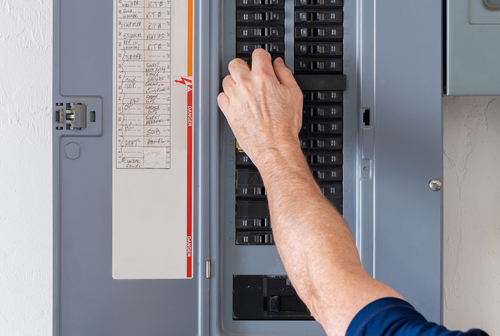 Winter blizzards and ice and summer thunderstorms are common in the New York Capital corridor, the Hudson Valley and western Vermont—and those will take down trees, which in turn knock out power. These threats exist along with long-term heatwaves putting considerable demand on the outdated and over-strained power grid in the summer months.
A generator can help keep things running during emergencies, but today’s homes need more than a portable gasoline powered generator. Not only are they smelly and hard to deal with, they can be insufficient at keeping equipment you need running for the duration, whether it’s lights and the fridge, or lifesaving medical equipment. If you want to rely on a portable generator, you need to get in line at the gas station to fill jerry cans when a storm is forecast, or you need a safe place to store gas on your property. Also, a portable generator needs to be set up and turned on—outside—after the power goes out, probably while a storm is still raging, maybe in the middle of the night.
To stay safe and comfortable, the power solution for most homes is a standby generator. Instead of gas or diesel, it runs on the same propane or natural gas you use to power other appliances and equipment in your home.
A standby generator, also known as a backup generator, is a propane or natural gas-fueled power source that is directly wired to your home’s systems so that it comes on within seconds of a power failure to keep your lights on and your refrigerator, furnace and a/c running until the utilities get the lines back up. Propane generators are quiet, extremely efficient and clean-burning, with low emissions.
A standby generator can also keep security systems on—giving you peace of mind, especially if the power fails while you’re away.
Size is the primary consideration when it comes to choosing the best standby generator for your household. An “essential power” model will run key equipment such as your refrigerator, and heat or AC and lights in a specific area. A true whole-house generator is able to handle the demands of most extra-large homes, even during extended outages.
The Main Care Energy Team will work with you to determine how much power you need to run the appliances or systems you need during an outage. We’ll talk to you about what equipment or systems will be most important to you in an emergency: refrigerator? Heating and cooling systems? Life support equipment? We usually recommend going for about 20% extra voltage beyond what your appliances require.
Once we’ve determined the best size generator for your home and lifestyle, our expert technicians will take care of every aspect of the installation, so it powers up your home without damaging your home’s electronic equipment or appliances.
Peace of mind is priceless. But when you do the math, a standby generator usually makes sense compared to dealing with the expense (and hassle) of a power outage—especially if your neighborhood is prone to them. By keeping even just your essential systems running, a standby generator can help you avoid the cost of replacing spoiled food, or the cost of a hotel room—if you can find one.
Another thing: According to Consumer Reports, a properly installed whole-house generator can increase the value of your home by as much as 5%. That’s a great return on your investment, before you ever need to use it.
Ready to learn more? Contact the team at Main Care today.
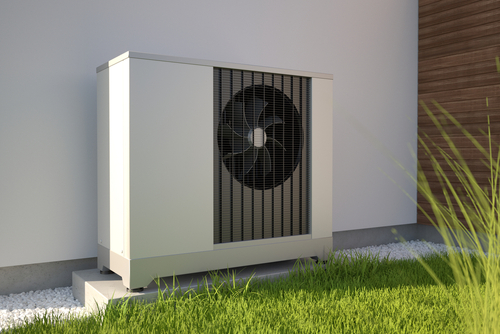 Heat pumps can be an alternative option when it comes to heating and cooling. A heat pump uses the outside air to heat a home in winter and cool it in summer. Because this technology uses electricity to move heat, rather than generate it, it’s much more energy efficient than other electric heating and cooling systems—and, installed and used correctly, it can help lower your energy bills across the board.
Heat pumps work by moving existing heat in the air from one place to another using an outdoor compressor and an indoor air handler. In the summer, hot air from inside your home is removed — creating a cooler indoor environment. While it sounds counterintuitive, in the winter, the pump extracts heat from the outdoor air or ground and distributes it to your home.
Of course, our winters can be particularly cold. A heat pump might not be the best choice as a sole source of heat in New York State and western Vermont. But because they can be installed without ductwork, they make a viable option that can help you use energy more efficiently while staying comfortable all year.
By using the heat pump in fall and spring, and when winter temperatures are milder, you can rely less on your furnace or boiler, helping keep those costs down. Once the outdoor temperature goes below a certain point, a heat pump will still provide heat, but it will need to work harder to find warm air, and it will use much more electricity.
Additionally, you can use heat pumps to strategically heat and cool specific rooms, which can also contribute to lowered fuel and energy costs.
It’s important to remember that because a heat pump works differently than central AC or a traditional heating system. There are some simple tips to keep in mind that will help ensure your heat pump performs efficiently while keeping your home comfortable.
As with all the systems and equipment you use to run your home, good maintenance routines are essential to keep everything running at peak efficiency. Your heat pump is no exception. Check the filters once a month and clean as needed. Don’t forget to clear away leaves, twigs and other debris from around the outside units.
The employee owners at Main Care can answer all your questions and help you find the best size and type of heat pump for your home. We have extensive training and experience in installing, servicing and repairing state-of-the-art heat pumps from top brands, like Samsung and Bosch.
If you’re interested in exploring your heat pump options, contact us today!
 Have you heard about Bioheat® fuel? It is one of the most effective ways for homeowners to lower their emissions right now without sacrificing an iota of comfort.
Bioheat fuel is a blend of ultra-low sulfur heating oil and biodiesel made from organic and recycled ingredients like:
You are already receiving Bioheat fuel if you’re a Main-Care Energy heating oil delivery customer in Warren County, NY, or elsewhere in our Hudson Valley, New York Capital Region, Western Vermont and Western Massachusetts service area. Here are some of the amazing advantages households enjoy when using Bioheat fuel.
Heating oil generates quite a bit of warmth. According to the U.S. Energy Information Administration, a single gallon of heating oil produces roughly 138,500 Btu of heat energy. To get that same amount of heat, you would need about 41 kilowatt-hours of electricity or 134 cubic feet of natural gas.
Bioheat fuel retains all this heat-generating capacity in a more environmentally friendly product. Plus, you can use it in existing oil-heat equipment without the expense or disruption of system modifications!
The petroleum heating oil component of Bioheat fuel is ultra-low-sulfur, which significantly reduces its negative impact on air quality. But the introduction of biodiesel wildly improves its emissions performance.
Biodiesel replaces petroleum gallon for gallon, and it lowers the resulting fuel’s greenhouse gas emissions by at least 50 percent. You’ll see considerably lower emissions of sulfur oxide, nitrogen dioxide, carbon dioxide, mercury, particulate matter and other substances.
At Main-Care Energy, we sometimes talk to homeowners who are concerned that biodiesel would have a negative impact on their heating system. Not only will Bioheat fuel not hurt your boiler or furnace; it will burn more cleanly and leave fewer deposits in your heat exchanger. Consequently, your system may need fewer cleanings, require fewer repairs and enjoy a longer service life.
If the benefits above aren’t enough, you can also get tax credits for using Bioheat fuel and equipment that works with it.
New York residents enjoy a clean heating fuel credit — applied at tax time — for each gallon of Bioheat fuel they purchase.
All customers are eligible for a federal tax credit of up to $600 for installing qualifying energy-efficient furnaces and boilers that have been rated by the manufacturer for use with Bioheat fuel that has a minimum 20% blend of biodiesel.
If you’re interested in enjoying all the robust heating, lower system maintenance, financial incentives and environmental benefits that come with using Bioheat fuel, reach out to the team at Main-Care Energy. We’ve been reliably keeping Northeastern households comfortable since 1930, and we’re committed to delivering 360° of Service. That commitment means we are here for your home around the clock, all year round and for the full life-cycle of your equipment. Delivering clean-burning, super-efficient Bioheat fuel is just one way we make good on that promise to you.
Interested in becoming a Main-Care Energy customer? Contact us today to get started.
 Generally speaking, sludge isn’t something you want anywhere in your house. But it can be especially pernicious in a heating oil tank. It can cause some significant problems for your tank, fuel lines and oil-powered equipment. The good news is that it’s pretty easy to prevent sludge build-up in your heating oil tank.
As one of the most trusted heating oil delivery companies in the New York Capital Region, the Hudson Valley, Western Vermont and Western Massachusetts, Main-Care Energy can help you prevent heating oil sludge — and get it out of your tank.
Heating oil sludge forms on the bottom of your heating oil tank. It’s composed of dirt, rust, oxidized fuel and water. Over time, it can accumulate and create considerable problems for your heating oil system if left unattended. Microorganisms thrive in it, which can lead to corrosion on the inside of your tank. Over time, this will lead to a heating oil tank failure and a fuel spill that can cost a lot to clean up.
Additionally, heating oil sludge can clog your fuel lines and heating equipment. Oil-powered systems are designed to prevent these clogs. The pick-up tube leading from the tank to the heating equipment is typically positioned a few inches above the bottom of the tank. However, sludge can get stirred up when new heating oil is added to the tank, enabling it to infiltrate the fuel line.
You can remove heating oil sludge from your tank, but the process involves draining all fuel first. As such, it’s a good idea to reach out to professionals to handle it. They can drain the oil tank, scrub away any sludge, clean and dry the tank and then return the heating oil to it.
The leading cause of sludge in heating oil tanks is condensation forming on the inner walls. You can prevent this condensation before it starts by keeping your tank filled during the off-season. So, if you ended the heating season with a near-empty oil tank, schedule a heating oil delivery now. Don’t worry — your fuel will still be good when winter rolls back around.
It helps if you use high-quality heating oil, and Main-Care Energy has you covered. We only deliver premium Bioheat® fuel, an eco-friendly blend of ultra-low-sulfur heating oil and organic biodiesel. This fuel is actually better for the long-term health of your heating oil equipment!
If you want total peace of mind that your heating oil system will work at peak performance, trust the team at Main-Care Energy. We always provide 360° of Service. That means we’re there for you 24 hours a day, every day of the year and for the full life-cycle of your home comfort equipment.
If you need an end-of-season heating oil delivery in Glen Falls or elsewhere in our three-state service region, just reach out to us, and we’ll get a driver to you right away.
 Propane is an essential fuel for your summer entertainment. Whether you’re using a grill tank to fuel your cookout or a portable propane cylinder to power a firepit, patio heater or some other outdoor amenity, propane gets the job done.
But how long can you expect a portable propane tank to last, and how can you safely dispose of a propane cylinder that’s ready to retire? The pros at Main-Care Energy can provide guidance for disposing of propane tanks in Lake George, elsewhere in New York, as well as in Western Vermont and Western Massachusetts.
The U.S. Department of Transportation (DOT) sets guidelines for inspection and requalification of portable propane tanks. They require that all propane cylinders (including your grill tank) be inspected and requalified by an authorized DOT facility 12 years after the manufacture date and every five years after that.
Propane cylinders can last a long time, but it’s essential not to use any cylinder that is expired or dented or if it has excessive rust and corrosion.
It would be best if you also were on the lookout for possible leaks on older propane cylinders. One simple way to do this with a grill tank is to mix a 50/50 solution of water and dish soap in a spray bottle. Coat your grill tank valve, grill hose and regulator with this mixture, then open the tank valve. If you see bubbling, there could be a leak. Close the valve and tighten all your connections, then reopen the valve and check again. If there are still bubbles, discontinue using the propane cylinder.
How you dispose of a portable propane tank in New York depends on which county and/or city you live in. But there are some general guidelines you can follow.
Propane cylinders aren’t eligible for curbside pickup since they are pressurized and present an explosion risk. You typically have two options for disposing of them. Firstly, you should contact the business that provided you with the cylinder since they may be able to dispose of it for you. If not, reach out to your local public works or sanitation department to find your nearest hazardous waste drop-off location.
In our service region of Vermont, you cannot dispose of propane cylinders through the normal trash services.
In Rutland County, Vermont, you can take empty propane tanks to a district transfer station. If they are filled, please get in touch with the distributor that provided the tank to you.
In Bennington County, you will need to locate the transfer station for your specific corporate or municipal entity and receive guidance.
Similar to New York and Vermont, you should not dispose of propane cylinders through curbside trash pickup. You should contact your propane cylinder distributor to see if they can accept and dispose of it for you. Otherwise, find a municipal collection program or household hazardous waste collection event near you. Your local public works department can help.
Stationary propane tanks that supply fuel to indoor and outdoor appliances, systems and amenities are a different issue than portable cylinders. These tanks aren’t regulated by the DOT and can last up to 30 years or more. (Underground tanks last closer to 20 years.)
Most Main-Care Energy customers lease their propane tanks from us. This is a great deal since we take care of all the installation, safety testing and upkeep. We will also replace your tank if it needs to be retired.
If you own your tank and think it might be on its last legs, reach out to us. We can inspect it, and we sell a range of top-quality propane tanks. We even offer a Propane Tank Ownership Finance Program.
Need help with an aging propane tank? Contact Main-Care Energy today.
 You can breathe a sigh of relief that we’ve made it past another winter in the Northeast. Although this winter was relatively mild, your home’s boiler or furnace probably worked extra hard through a few frigid weeks, keeping you and your loved ones warm and safe.
Now that we’re well into spring in Greenwich and throughout the New York Capital region, it’s worth looking at your heating oil levels. Your heating system probably won’t be needed for several months, but it’s a good idea to keep a filled heating oil tank, nonetheless. Main-Care Energy can help you out with that and other spring HVAC work.
If your heating oil tank gauge is at ¼ or lower, we strongly recommend that you arrange a fuel delivery. Empty space can lead to condensation inside your oil tank during warm months. This moisture settles at the bottom of your tank, separated from the heating oil. There, it becomes a breeding ground for bacteria and sediment. Soon, you could have sludge clogging your fuel lines and corrosion in your tank. You might end up calling Main-Care Energy for a heating system repair or a premature tank replacement.
Arranging a heating oil delivery is a simple way to prevent condensation and extend the life of your storage tank.
We sometimes speak to customers worried that their heating oil will lose combustibility or otherwise “go bad” while sitting unused in a tank. Rest assured, your fuel will be ready to go when you need it again in the winter.
Heating oil’s shelf life is between 18 and 24 months. For comparison, unleaded gasoline starts to lose combustibility after three to six months. Filling your heating oil tank now just means you’re ahead of the game for next winter.
Have you arranged an annual tune-up for your heating equipment yet? Spring is an excellent time to do that. If your manufacturer’s warranty still covers your heating system, you are likely required to arrange this service to keep the coverage in effect. Similarly, it’s a good idea to have a professional technician from Main-Care Energy look at your furnace or boiler after the heating season to clean, calibrate and test it, plus attend to any lingering issues that could cause a breakdown later on.
If your heating system is covered by one of our Home Protection Plans, your annual maintenance is already paid for. All you need to do is schedule it.
Don’t worry — your tune-up won’t “wear off” between now and the arrival of winter. Your heating equipment will be ready to go on the other side of summer!
Want to experience Main-Care Energy’s renowned 360° of Service? Reach out to us today to request service or arrange a heating oil delivery.
 At Main-Care Energy, we understand that homeowners value having a choice of energy solutions. We’ve been serving households in Albany and the broader New York Capital Region for nearly a century, and today, we install and service equipment that runs on heating oil, propane, natural gas and electricity.
Our conversations with customers often revolve around the benefits of various energy sources for heating, hot water and other home comfort needs. Time after time, we find that propane matches and surpasses many other energy options across a range of criteria. Here’s why you should consider propane for your home:
Modern propane heating systems boast fuel efficiency ratings of up to 98.5%, ensuring that the overwhelming majority of your propane usage is directed at heating your home and very little is wasted. Indeed, propane furnaces can consistently deliver air heated up to 140° F — even when it’s freezing outside.
Propane water heaters similarly impress with recovery rates roughly double that of electric models, and tankless water heaters push this efficiency even further. Propane can also turbocharge your laundry drying times compared to electric dryers.
Having a propane tank allows you to fuel a wide range of premium home appliances and amenities. Here’s a glance at the products that propane can fuel:
When you need the peace of mind that your HVAC equipment can deliver toasty comfort, propane delivers. This fuel guarantees exceptional heat production, offering a powerful 91,452 Btu of heat energy per gallon. That’s over double the heat generation per cubic foot as natural gas. You would require 27 kilowatt-hours of electricity to match it.
Listed as an alternative fuel under both the National Energy Policy Act and the Clean Air Act, propane’s carbon intensity is substantially lower than that of fuel oil, gasoline and the average U.S. grid electricity. Free of methane, propane burns cleanly, minimizing your carbon footprint with almost negligible particulate emissions.
Over 90% of propane consumed in the U.S. is domestically produced, positioning us as a net exporter. This not only ensures a stable supply but also partly shields propane prices from the volatile global energy market, offering you a more predictable energy budget.
Main-Care Energy stands as the most trusted propane delivery service in the NY Capital Region and Hudson Valley. Our customers rave about our hassle-free Automatic Delivery service. Leveraging state-of-the-art systems that forecast your needs based on past usage and weather patterns, we schedule your next propane delivery before you run low.
To take advantage of Main-Care Energy’s top-tier propane services and join our growing customer family, reach out to us today.

Since 1930, the team at Main-Care Energy has been delivering premium heating fuel, equipment services and peace of mind to homes and businesses in the Capital Region, the Hudson Valley, Western Vermont and Western Massachusetts. Our goal is always to deliver 360° of service. That means we’re there for you around the clock, all year round and for the full life cycle of your home comfort equipment.
As part of that mission, we’ve developed a new and improved company website and blog — and we’re thrilled to show it to you. We designed this site with your needs in mind. Whether you’re a longtime Main-Care Energy customer or someone interested in learning about our products and services, this website can provide you with the information you need.
Be sure to bookmark our blog and check back. We’ll be posting new information regularly.
And please let us know what you think of our new website. We’re always here to respond to your message.


