 Your HVAC system is one of the biggest investments you make in your house. Taking care of it is important — both to protect your investment and to keep your home and family comfortable. There are steps you can do on your own, such as changing or cleaning air filters regularly, but for everyone besides a licensed HVAC technician, performing a tune-up on a home heating system is not a DIY project. (And most equipment warranties require professional maintenance to stay valid.)
But what’s involved, and what should you expect when you schedule a service call for your HVAC? The goal is to make sure your systems are running properly and efficiently. When you call Main-Care Energy for service, you can expect one of our expert owner-employees to arrive on time and get the job done precisely while treating you and your home with respect. Here’s what we’ll be doing:
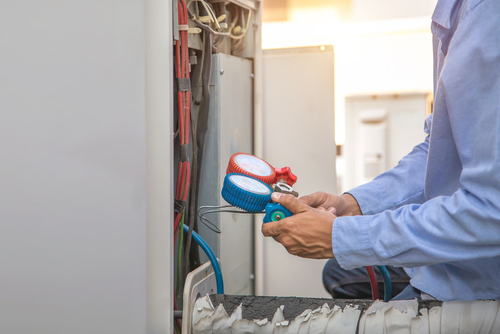
Looking for a dedicated, highly-trained team that can safeguard your HVAC system’s efficiency and reliability for years to come? Main-Care Energy is the one and only partner you need. Here’s a rundown of what we do on our multi-point HVAC tune-up:
You can count on us to clean or replace any parts that have become dirty or worn down, like oil filters, fuel pump screens, air filters, belts, thermocouples, etc. We also have a particular focus on safety, performing combustion efficiency tests, checking your equipment’s safety controls and looking for the presence of smoke or carbon dioxide.
Once service is complete, our tech will review your system’s condition and explain any issues they found or took care of. If they discover any larger issues, they’ll explain your repair options. They’ll also offer maintenance tips and can make suggestions for upgrades to improve your home’s comfort and efficiency if you want more information.
Even the best-maintained equipment can sometimes develop a problem that requires a professional repair. So, it’s important that you have a company you can rely on to help you 24/7. That’s why so many homeowners choose Main-Care Energy in Washington County and throughout our service area in New York and Vermont. They appreciate our commitment to 360° of Service: We’re your one-stop shop for all your HVAC needs, including caring and responsive 24/7 emergency repair service — because, more often than not, those problems develop in the middle of the night or on a weekend.
We also offer a range of comprehensive service plans to help you protect your investment and keep your HVAC equipment operating at peak efficiency. Whether you choose our Gold Card, Silver Card or Standard Home Protection Plan, you’ll find the option that’s right for your needs and your budget.
Each option includes priority emergency service and our thorough seasonal tune-up service, plus different levels of discounts and coverage for parts and labor.
At Main-Care Energy, we aim to support your systems and appliances for their full life cycle. Our friendly team members will help you select your equipment, and then we will install it, deliver fuel for it, maintain it, repair it when necessary and replace it when the time comes. Contact us to become a customer today.
 If you’ve never lived in a propane-fueled home before, you might be surprised to know how versatile it is and how many ways it can be used in your home. Not only can propane provide steady, reliable heat energy at an affordable price, but it also offers exceptional performance and efficiency in a wide range of home appliances at a much lower cost than electricity.
You might also be surprised to learn that propane is a domestically sourced fuel that is one of the cleanest and efficient fuels around.
If you’re looking to enhance your home’s value and improve efficiency, updating or adding propane appliances is a savvy move.
Nothing beats the precision and control you get cooking with gas. That’s why it’s the first choice of professional chefs in the kitchen—and on the patio. An electric range will never provide the same control as cooking with gas. Think about why you opt for a propane grill instead of charcoal: You can adjust your flame with the turn of a knob. An electric burner doesn’t respond as quickly, taking more time to reduce or increase the heat. That means you can heat up a can of soup quickly without it boiling over, and you can keep a delicate sauce at a subtle simmer without scorching.
Ask anyone who uses propane to heat their home and they’ll tell you how well it provides steady, reliable heat energy at an affordable price. That’s because propane generates more BTU’s than an equivalent amount of electricity, so you need much less propane to produce the same amount of heat or energy. Propane is also more efficient than natural gas, delivering twice the heating energy.
And even if you don’t opt for propane for your main heating system, it’s a smart choice for supplemental space heating. A propane fireplace brings all the ambiance and warmth of a wood-burning fireplace to any room, without the mess, smoke and ash. And unlike a traditional fireplace, you can install a propane-fueled fireplace just about anywhere: living room, dining room, bedroom, even the kitchen. Imagine the luxe, spa-like glamour of a fireplace in your master bath!
The same reasons propane is great at providing heat makes it ideal for heating water—and powering appliances and equipment that heat water. It’s worth considering that water heating is a big percentage of home energy bills—especially when you consider how much hot water a household uses: bathing, laundry, dishwashing. An energy-efficient propane water heater can help you reduce your energy costs, and perform better too. Tankless water heaters save energy by instantly heating water when you need it, rather than keeping a large tank hot all the time. As a result, you can enjoy virtually unlimited hot water—while seeing savings of up to 40%!
Adding safe and efficient propane patio heaters can let you enjoy your outdoor spaces earlier in the spring and later into the autumn. Fire pits and fire bowls are an attractive focal point and gathering space for entertaining friends and family. And propane-fueled pool and spa heaters will warm up the water much faster than an electric heater, and maintain the temperature better once the water is warm. As a result, propane pool heaters help you keep heating costs under control, while letting you enjoy your pool or spa more.
When storms knock out power, a propane-fueled backup generator will keep your lights on, your refrigerator running and everything else powered up until the utility companies can make repairs. What’s more, a whole house generator can boost your home’s value and get you a lower rate on your homeowner’s insurance.
If you’re looking to enhance your home’s value and improve efficiency, updating or adding propane appliances is a smart move.
The experts at Main-Care energy have the experience and knowledge to answer all your questions. We provide 360 degrees of propane service, from storage tank leasing and installation to reliable and convenient propane delivery service at competitive prices, and more. Contact us for more information or to become a customer today.
 Because kerosene is more stable than traditional heating oil under colder conditions —conditions we see pretty regularly in the Northeast — it’s a popular heating fuel for mobile homes and buildings with outdoor storage tanks.
At Main-Care Energy, we sell and deliver a kerosene alternative called WinterGuard fuel, which our customers prefer. In this article, we’ll discuss how our fuel differs from traditional kerosene, plus everything you need to know to help you safely store your winter heating supply of kerosene or WinterGuard fuel.
To understand how WinterGuard fuel and kerosene differ, it’s crucial to know how each is made.
Kerosene, like traditional heating oil, is made from crude oil. It’s produced at extremely high temperatures and has a low “gel point.” If you were to place traditional heating oil in an outdoor tank, it would start to thicken in sustained freezing temperatures, creating issues for your heating equipment. Kerosene can withstand much colder conditions.
WinterGuard fuel, on the other hand, is derived from our Bioheat® fuel (a blend of ultra-low-sulfur heating oil and biodiesel). However, we treat the Bioheat fuel with de-icer and additives to lower its gel point. So, you get all the benefits of traditional kerosene.
One of the big pain points for households that use kerosene is how pricy it can be. WinterGuard fuel is more affordable per gallon. But that’s just the start of the benefits for your home and budget.
Because WinterGuard fuel is made from clean-burning Bioheat fuel, it leaves fewer deposits in your heating system, lowering your maintenance costs over time.
Additionally, New York residents who use WinterGuard fuel can receive a tax credit on their state income tax returns. New York offers a credit for every gallon of biodiesel you purchase to heat your home — and that can really add up!
Whether you use kerosene or WinterGuard to keep your house, business or mobile home warm, you should follow these storage guidelines:
Whatever your winter heating fuel needs in our service area, the committed employee-owners at Main-Care Energy are ready to help. Contact us today.
 There’s a ton of talk about making a transition to all-electric heating and reducing dependence on fossil fuels. And we’re all in favor of helping prevent climate change. But going all-electric isn’t always feasible. A big barrier for many folks thinking about purchasing an electric vehicle is “range anxiety.” That’s the worry that your car battery will run low and you will have no place to charge up. A solution was the hybrid, which lets you run on battery power and switch to gas when you want to.
When it comes to heating a home here in the Northeast, where winter temps can be downright frigid, there can be similar anxiety when it comes to going all-electric. That’s because electric heat, particularly a heat pump, can be a lot less efficient (and less effective) when it’s very cold.
But, as with electric vehicles and hybrids, there’s an option that lets you feel good about your environmental footprint without having to feel the cold. Would you be surprised if we said it was hybrid heat?
The idea is not that complicated: It’s a combination of heating technologies that let you heat your home in the most efficient way, depending on the temperature.
An electric heat pump works by moving existing heat in the air from one place to another using an outdoor compressor and an indoor air handler. In the summer, hot air from inside your home is removed — creating a cooler indoor environment. And, in the winter, it pulls heat from the outdoor air (or ground, if you have a geothermal system) and distributes it to your home.
Because they move heat, rather than generate heat, they use less energy and are highly efficient. But, when temperatures fall below a certain point, usually 25⁰ or 30⁰ F, a heat pump will need to work harder to find warm air, using more electricity.
That’s where a hybrid system kicks in, and your system can switch to a furnace powered by heating oil, propane or natural gas.
The primary benefit of hybrid heat is that it enables you to maximize your efficiency and keep heating costs under control.
Using your electric heat pump when temperatures are more moderate makes you less reliant on heating oil. You’ll use less heating oil, so your supply lasts longer. That can result in significant savings over time.
Most people save enough that their hybrid system pays for itself in just a few years.
If you’re ready to learn more about how a hybrid heating system could help you keep your home more comfortable in the winter, while reducing your carbon footprint, talk to the team at Main-Care Energy. Our employee-owners are happy to answer all your questions and have extensive training and experience in installing, servicing and repairing state-of-the-art hybrid systems in Upstate New York and western Vermont.
We’re here to help, and that includes financing with low fixed interest rates and flexible terms. We also have your back when it comes to maintenance and repairs, with great service plans and 24/7 service. Contact us for more information today.
 Has it happened to you? You wake up in the night to reach for another blanket and you realize, it’s not just cold—the heat is off! What do you do?
If you’re a Main-Care customer, you know you can pick up the phone any time, day or night, and one of our employee-owners will have your back. It’s part of our 360° of Service commitment.
No matter when you call, our techs can get you up and running fast. But before you call, try these troubleshooting tips: There could be an easy solution you can handle yourself, avoiding the cost of a service call.
Check Your Thermostat
Make sure your thermostat is set to a temperature at least 5° above room temperature and set to “heat.” Is it the batteries? Try installing fresh ones.
Check the Emergency Switch
Did the switch for your heating system accidentally get turned off? This happens more often than you’d think. Don’t overthink it, just turn it on.
Check Your Fuel Supply
If you are on will-call for heating oil or propane deliveries, and it’s been colder than usual or you haven’t checked your tank gauge in a while, you may have run out of fuel. Consider signing up for our free and convenient automatic delivery service designed to prevent runouts.
Check Fuses and Circuit Breakers
Circuit breakers can easily trip. Check the breaker that your heating system is on, and turn it on if it’s off.
Check the Air Filter
When the air filter on your furnace gets clogged, the system will shut down. Replace it and keep a note on your calendar to check it at least once a month—especially if you have some furry family members.
Check the Boiler
If you have a hot water boiler, you can skip this step. If you have a steam boiler, check the water level gauge. It should be at least half full. Call us if it isn’t.
Reset the System
If you have an oil-burning system and none of the previous steps work, push and hold the Reset button for 30 seconds. Only do this ONCE. Doing it more than once floods the combustion chamber with too much heating oil. That’s an expensive repair job on top of any other repairs you may need.
If none of those steps resolves the problem, call us and we’ll send a technician to get you up and running as quickly as possible.
The best way to prevent a heating system breakdown is to keep up with regular maintenance. A thorough tune-up is designed to keep your system running at peak efficiency all winter. But it will also catch and correct many small problems before they become expensive repair job.
Main-Care Energy makes it easy, with Home Protection Plans that ensure that your systems receive annual maintenance, along with a range of other fantastic benefits.
No matter what you need, or when you need it, Main-Care is here for you. We’re your neighbors so we go out of our way to exceed your expectations. Contact us for more information today.
 When it comes to home heating, you have a lot of choices. And you could make good arguments for many of those options. Convenience is a big reason customers opt for natural gas service: Delivered to your home via a system of underground pipes, there’s no need to worry about runouts or scheduling deliveries. Whether you’re considering upgrading your heating system or shopping for a new home, you’ll find that natural gas can be an efficient option that not only keeps your home warm, but comes with a range of additional benefits.
Natural gas is great at providing consistent and even heat. Modern gas heating equipment is designed to be extremely efficient, which can help significantly lower your energy costs, while providing quick and effective warmth. That translates into a cozy home even on the coldest days.
The same efficient heating power makes natural gas great for heating water. An energy-efficient gas water heater can help you reduce your energy costs, and perform better too. Tankless water heaters save energy by instantly heating water when you need it, rather than keeping a large tank hot all the time. As a result, you can enjoy virtually unlimited hot water—while seeing savings of up to 40%!
Like propane, natural gas offers real versatility. In addition to heat and hot water, natural gas can be used to fuel fireplaces, adding cozy charm as well as safe, efficient supplemental heating—without the hassle and mess of a wood-burning fireplace.
Nothing beats the precision and control you get cooking with gas. That’s why it’s the first choice of professional chefs, and most home cooks prefer it in the kitchen—and on the patio. An electric burner doesn’t respond as quickly, taking more time to reduce or increase the heat. Gas lets you sear food quickly without overcooking it, and keep a delicate sauce at a subtle simmer without scorching.
Additionally, with natural gas service, you can fuel other appliances, like clothes dryers, pool heaters, and even backup generators. Having a standby source of power that comes on automatically when storms knock out power can be a game changer. A generator that’s fueled by the natural gas service to your home means you don’t need to worry about keeping diesel on hand, or struggling to set up a portable unit outside, probably in the dark.
If you are thinking about upgrading your natural gas service, or just need to replace existing gas equipment, you can count on the expert team at Main-Care. There are lots of reasons we’re the go-to team in the New York Capital Region, the Hudson Valley and Western Vermont when it comes to natural gas appliance installations, connections and safety testing. We have nearly a century of experience, and our employee-owners are your neighbors: We’re here for you, with technicians on call 24/7 and a team willing to work seven days a week and in the middle of the night when necessary to make sure your family is warm and comfortable, and your business is running smoothly.
Contact us to become a customer today.
 Winter in our area is no joke. The Adirondacks get some of the coldest temperatures in New York State. So when it comes to keeping your home comfortable, you want an option that will perform efficiently. For most people, a furnace is the workhorse choice: they’re powerful and reliable, no matter what type of fuel you use to heat your home. But with New York State’s aggressive climate goals, many customers are looking at other options and the Main-Care team has been fielding a lot of questions about heat pumps.
Choosing between a heat pump and a furnace doesn’t have to be an either-or decision. Understanding the benefits of each and how they can complement each other can help you make an informed choice.
Heat pumps work by moving existing heat in the air from one place to another using an outdoor compressor and an indoor air handler. In the summer, hot air from inside your home is removed — creating a cooler indoor environment. While it sounds counterintuitive, in the winter, the pump extracts heat from the outdoor air and distributes it to your home.
Of course, with our winter lows, a heat pump needs to work much harder to keep your home comfortable all season. But in early spring and late fall, when temperatures are milder, it can be a very efficient—and environmentally friendly—option.
Our “shoulder seasons,” when temperatures generally hit between 40°F and 60°F. are a sweet spot for heat pump efficiency, when they can keep indoor temperatures comfortable without consuming a lot of energy.
Of course, you could just rely on your furnace for heat. A furnace is excellent for providing a lot of heat when the mercury plummets for weeks or months at a time. But when the weather is milder and temperatures fluctuate a lot, they cycle on and off more frequently in milder weather, which can lead to higher energy bills.
That’s why adding a heat pump to your home’s HVAC system can go a long way to improve cost efficiency. Using your heat pump at those times when using your furnace might be overkill can lead to significant savings on your energy bills. Many heat pumps come with features such as programmable thermostats and variable-speed compressors, which further enhance their efficiency and comfort levels.
Additionally, you can use heat pumps to strategically heat and cool specific rooms, which can also contribute to lowered fuel and energy costs.
For homeowners in Capital Region, western Vermont and the Hudson Valley, the ideal setup might be a hybrid system that combines both a heat pump and a furnace. The heat pump can handle your heating needs during the spring and fall, while the furnace can take over during the coldest months.
The employee-owners at Main-Care can answer all your questions and help you find the solution for best your home. We have extensive training and experience in installing, servicing and repairing state-of-the-art heat pumps from top brands, like Samsung. If you’re interested in exploring adding a heat pump to your home, contact us today!
 Whether you’re running a fleet of diesel delivery trucks or construction vehicles, you know fuel efficiency is crucial when it comes to keeping costs under control. Diesel fuel prices fluctuate all the time, so it’s hard to always know how it will hit your bottom line. The good news is that there are some fairly easy steps you can take to help make sure you’re running your diesel fleet efficiently—and as a bonus benefit, practicing fuel efficiency is better for the environment.
Regularly scheduled maintenance, including oil changes, filter replacements, and engine tune-ups, can help ensure that your vehicles are running at their peak performance levels. Keeping your vehicles in good shape is not only good for fuel efficiency, but it reduces costly breakdowns and downtime for repairs.
Maintaining proper tire pressure and ensuring wheel alignment will also improve performance, because vehicles won’t have to work as hard; that translates into fuel savings over the long term.
Improved aerodynamics sounds like something for NASCAR, but it plays a significant role in the diesel fuel efficiency of commercial vehicles, too. It’s particularly true if your fleet is driving at highway speeds. You can reduce drag—that is, anything that creates resistance as a vehicle is moving through air—with some simple adjustments. Consider adding aerodynamic fairings, side skirts, and trailer tails to reduce drag and improve fuel economy.
Teach your drivers about efficient driving techniques. Things like proper acceleration and braking, maintaining steady speeds, and avoiding excessive idling will significantly improve diesel fuel efficiency. Try creating an incentive program for your drivers based on fuel-efficient performance to encourage more eco-friendly and fuel-efficient driving habits.
If you don’t already do this, you will be surprised at the difference efficient route planning and vehicle utilization can make when it comes to maximizing fuel efficiency. GPS technology and route optimization software can help identify the most fuel-efficient routes and reduce unnecessary mileage. Optimizing vehicle load capacity and reducing empty trips can further improve diesel fuel efficiency by ensuring that each vehicle is operating at maximum efficiency.
If you are fueling your fleet at retail gas stations, you can probably save money—and improve efficiency—by switching to fleet fueling.
For starters, you get to take advantage of wholesale pricing and bulk fuel discounts, but fleet fueling also delivers savings on mileage and miles-per-gallon. When you consider the cost per mile to operate each of your fleet vehicles, the cost to send them just two or three miles out of the way to fuel up really adds up! Onsite delivery removes those costs.
You’ll also receive detailed invoices (instead of gas station receipts that can get lost) so you can more accurately track your diesel fuel usage to reduce waste.
Want to know more about the advantages of fleet fueling? Find out why so many commercial fleet operators Capital Region, western Vermont and the Hudson Valley trust Main Main-Care for their fleet-fueling needs. Our team understands the importance of a reliable source of quality diesel—after all, we operate our own fleet of delivery and service trucks and need to keep them on the road to serve our customers.
Contact us for details today.
 You may pride yourself on your home repair skills. Maybe you rebuilt the engine of your vintage Mustang, or your friends think of you as their personal tech support. Fixing things yourself can be extremely rewarding—and it can save you money, too. But some jobs are best left to the pros. Installing central AC is one of those things. Installing a ductless system is on that same list. When it comes to home cooling, the DIY list stops at a window unit, or maybe a ceiling fan.
Here are 10 reasons you should leave air conditioning installation to the experts at Main-Care.
1. Training
We’ve gone to school for this. And yeah, maybe we make it look easy, but electrical and ductwork done wrong can damage your equipment or result in safely issues.
2. Safety
Improper wiring work can result in shocks, which can be deadly, and can also lead electrical problems and even fires. Working with refrigerants is also dangerous. They can cause frostbite or respiratory issues if not handled correctly. Professionals are trained to manage these risks safely.
3. Load Calculations
Whether you are going with a central AC or a minisplit system, correctly sizing the equipment for your home is crucial. Too small and it won’t effectively cool your space, while going too big can lead to inefficiency and higher energy bills. Our technicians know how to conduct detailed load calculations to determine the appropriate system size for your home.
3. Paperwork
Depending on your local laws, you will need to follow specific building codes and regulations. We’re familiar with these types of requirements and can ensure your system meets all legal standards. When you do the work yourself, you risk inadvertently violating codes, which could lead to fines or issues when you sell your home.
5. Warranty Issues
It might sound like just more paperwork, but most manufacturers require professional installation for the warranty to remain valid. (They also often require professional maintenance to keep the warranty valid.) If you install the system yourself, you could void the warranty, meaning any future repairs or replacements that might have been covered will come out of your pocket.
6. Performance
When our HVAC technician installs your cooling equipment, you can be sure that your system is running at peak efficiency—we know how to calibrate your system and run tests to make sure it’s working the way it should. A DIY installation can result in leaks, poor airflow, and other issues that reduce efficiency, resulting in higher energy costs and uneven cooling throughout your home. Not to mention the expense of having someone come in and fix your work.
7. Specialized Tools and Equipment
Installing a central AC system requires tools and equipment you don’t find in the average toolbox. We have vacuum pumps, refrigerant gauges, and flaring tools—and we know how to use them. Even if you want to spend the extra money to buy or rent these specialized tools, you may not use them correctly.
9. Expert Troubleshooting
If problems arise during installation because of the quirks or your home’s electrical system, for example, our technicians have the experience and knowledge to troubleshoot and resolve issues efficiently—and safely.
10. Post-Installation Support
When you work with a professional, you get post-installation support. That includes maintenance and repair services. You can rest assured that your new cooling system will keep you cool and comfortable while performing efficiently.
Find out why homeowners and businesses from the Lower Hudson Valley to the Adirondacks and throughout our service area trust the employee-owners at Main-Care Energy to install and maintain their cooling systems. Contact us for more information today.
 When you aren’t in “the business,” you don’t always understand all the lingo. And you probably don’t need to understand all of it—CFM or HSPF won’t come up often in your daily conversations like it does in ours! But HVAC can turn up a lot—like when you search for a heating or cooling repair technician. That’s because HVAC stands for heating, ventilation and air conditioning. It’s about your heating and cooling systems, as well as the system that moves air through your home, whether it’s warm or cool.
Depending on how you heat or cool your home, the components of your HVAC system can vary.
Many modern homes rely on a ducted system. You might also call it “central air.” Ducted systems use a single blower to circulate heated or cooled air throughout your home using a system of ducts or pipes. A ductless system could be a radiant heating system (think radiators) and window ac units, or it could be heat pumps located around your home that both heat and cool your home in zones.
But what about the “V” part—the ventilation? Ventilation is the intake of fresh air, and it can happen in two ways. Natural ventilation is when air moves in and out of a home through windows, doors and vents. Mechanical ventilation uses blowers and other mechanical systems to move air, and also filter it to remove dust, allergens and odors.
Natural ventilation comes from windows and doors that allow fresh air into your home. Older homes tend to have gaps and spaces that provide a bit more “natural” ventilation than might be desirable: Small openings around windows and doors, and old or poorly installed insulation mean that more air can escape or get in from the outside. That means air that you’re paying to heat or cool can escape (and, warm or cold air can get in).
Modern homes are much better insulated—they have a tighter “envelope” to use more lingo—which means very little air can escape. But it also means the “V”—ventilation—part is more important. Vents, an air handler and ductwork work together to allow fresh air to enter, passing through filters that remove dust, pollen and pollutants, and circulate through your home and back to your heating and cooling equipment. If improving air quality is your goal, a variety of products exist to filter indoor air utilizing UV light, particle charge, and other methods of isolating germs and pollutants.
Your thermostat is also a key part of your HVAC system. Depending on how your home and your heating cooling equipment is set up, you may have one thermostat that controls the whole show, or multiple independent thermostats. Additionally, you may have a manual thermostat, a programmable thermostat, or a smart thermostat. With a manual thermostat, the temperature stays at whatever you set. A programmable thermostat can change temperature on a preset daily or weekly schedule. A smart thermostat can be programmed and also adjusted on the fly, from your smartphone—some even connect with your home automation system like Main-Care Connect.
No matter what type of thermostat you have, you can use it to lower your costs by 10% or more. To maximize your savings, set your thermostat for 68° when you’re at home and awake in the winter, and 78° in the summer. Lower the setting by 10° when you’re sleeping or out of the house in cold weather, and raise it by 10° in the summer. Smart thermostats make it super easy, because you can use your phone to raise or lower the temperature a half hour before you get home.
In addition to keeping you and your family cool in the summer and warm in the winter, your HVAC system can play a big part in helping you keep energy costs manageable.
Of course, new HVAC equipment is designed to be more efficient than ever. But no matter how old your equipment is, keeping your heating and cooling equipment tuned up with regular maintenance once a year will help ensure it operates efficiently. Clean filters, oiled motors, and properly working parts mean your heating and cooling equipment doesn’t need to run as hard to warm or cool air and move it all around your home. A tune-up can also prevent minor problems from becoming expensive breakdowns.
Whether you’re ready for a tune-up or thinking your due to replace your HVAC system, with Main-Care Energy, you have a full-service team of HVAC professionals, home-efficiency experts and the best fuel delivery team in the region. Contact us today for more information.


