 If you’ve recently moved into a home that’s heated with an oil system, you are in for some robust, dependable warmth all winter long. Today’s heating oil is cleaner-burning than ever, but it still delivers some of the most powerful heat of any home energy source. You can count on this heat regardless of how icy-cold it gets in New York’s Capital Region, the Hudson Valley, Western Massachusetts or Western Vermont.
That said, you still need to ensure that your home heating oil tank stays filled. If you let your tank run out, you could end up needing a last-minute emergency fuel delivery to get your furnace or boiler running again.
In this post, we’ll tell you how to keep track of your heating oil tank levels and how Main-Care Energy can ensure you never run out of fuel.
Keeping track of your heating oil supply is really very simple. It’s all about knowing where to find your tank gauge and how to read it.
Your heating oil tank gauge is typically found on top of the tank. It appears as a clear glass or plastic cylinder with a floating marker that indicates the oil level. The markings on the gauge usually include “F” (Full), “3/4,” “1/2,” “1/4,” and “E” (Empty). The floating marker tells you the approximate amount of oil left. For example, if the marker is at “1/2,” your tank is half full.
Does your home equipment use propane instead of heating oil? Learn how to read your propane tank gauge here.
To avoid running out of fuel, it’s best to schedule a heating oil delivery when the gauge’s level is approaching 1/4 full. Waiting too long could leave you scrambling, particularly during extreme cold spells when demand is high, and delivery queues are longer.
Main-Care Energy offers FREE automatic heating oil delivery, so you never need to worry about checking tank levels or running out of oil again. Our computerized system tracks your usage based on your customer profile and weather conditions. We can then deliver heating oil when you need it. When you enroll in an automatic delivery, you can leave the stress of managing your heating oil supply behind.
Most of our customers choose the convenience of automatic delivery and can attest that it doesn’t lead to higher fuel consumption. We only send a delivery driver to you when you need heating oil. And you will only ever pay for the fuel we put into your tank. It’s all part of being there for you every hour of the day, every day of the year and for the full life-cycle of your equipment — what we call 360° of Service!
Need assistance or ready to sign up for automatic delivery in Lake George or elsewhere in our service area? Contact Main-Care Energy today to become a customer.
 How comfortable is your home these days in Catskill or another town in the Hudson Valley, the Capital Region or Western Vermont? It’s crucial to have a heating and cooling system that can stand up to the often extreme weather conditions in this region.
At Main-Care Energy, we’ve been helping homeowners select and install the ideal HVAC equipment for decades. Reach out to our team to discuss your many heating and cooling options.
While heating and cooling equipment can operate for a long time, especially with regular maintenance, these systems won’t last forever. After about 15 years, your boiler or furnace is likely to need replacement. Central air conditioning equipment lasts between 10 and 15 years. Some scenarios when you should consider new HVAC equipment include the following:
Here’s a breakdown of some of the HVAC systems that Main-Care Energy installs — and how we can help you enjoy the best home comfort all year round.
The high-efficiency oil- and gas-fired heating systems we install remain a gold standard for wintertime comfort in unforgiving Northeast winters. You can enjoy robust, reliable heat regardless of how cold it is outside. Propane furnaces, for example, can consistently heat air to 120°F.
And today’s boilers and furnaces boast extraordinary fuel efficiency ratings, as high as 98.5%!
Pairing your forced-air heating with an energy-efficient central A/C system is a winning combo. Using the same ductwork as your furnace, these tried-and-true cooling systems can be controlled from a central thermostat. Main-Care Energy is proud to carry the industry’s best central A/C products with high SEER ratings. We’ll size one to the precise square footage and layout of your home.
With improving heat pump technology, all-electric heating and cooling systems are becoming more viable in our part of the country. These state-of-the-art products transfer heat between the inside and outside of your home to regulate temperatures. Heat pump systems don’t even require ductwork!
Talk to a Main-Care Energy technician about whether a heat pump or ductless mini-split is a good option for you.
Interested in investing in cutting-edge heat pump technology while having the backup security of oil or gas on the coldest nights? Consider a hybrid system.
Hybrid heat systems offer both versatility and powerful heating performance. An electric heat pump efficiently cools and warms your rooms, but these systems also feature a backup auxiliary furnace powered by heating oil, propane or natural gas. When outdoor temperatures fall below a specific threshold, the system seamlessly transitions from the heat pump to the furnace, ensuring consistent and reliable heating even in extreme conditions.
When you come to Main-Care Energy for your HVAC needs, you can enjoy the ease and luxury of today’s most advanced home automation technology. We call it Main-Care Connect.
With Main-Care Connect devices and systems, you can remotely control countless in-home functions. These include the following:
At Main-Care Energy, we always deliver 360° of Service. Contact us today for a free consultation on your home’s HVAC options.
 These days, people have automated subscriptions for items they used to have run out to buy every time they needed them. Maybe you have a scheduled delivery of your preferred shampoo or breakfast cereal. Many new parents can attest to the value of setting up a monthly recurring diaper delivery.
But what about the fuel that powers your home’s heating equipment, water heater, gas range, clothes dryer or standby generator? At Main-Care Energy, we like to say that the propane we deliver is more than just a product — it’s a guarantee of your comfort and quality of life. We are happy to offer our customers in Albany, the Hudson Valley, Western Vermont and Western Massachusetts a way to ensure they won’t run out of this essential fuel. It’s called automatic propane delivery.
If you’re calling us every time you need a propane delivery, you could be leaving yourself open to a lot of discomfort and extra costs. If you get busy and forget to check your propane tank gauge, your first clue that your tank is empty could be a furnace that won’t come on or a shower that won’t warm up. We’ll need to arrange an emergency propane delivery for you. We’re also required to perform a safety leak test before refilling your tank and restarting your propane equipment. It’s an inconvenient, aggravating situation.
Conversely, you can enjoy hassle-free convenience with our automatic delivery service. Our smart system monitors your usage year-round and schedules deliveries ahead of time, ensuring you never run out — especially during the busy winter months. Best of all, this reliable service comes at no extra cost!
You have a lot to do throughout the year, and allowing Main-Care Energy to track your fuel consumption and schedule propane deliveries for you takes those things off your to-do list.
Automatic delivery is also the best way to ensure you always have fuel during times of the year when there’s especially high propane demand. We can optimize our schedule to ensure everyone gets the fuel they need, and you won’t need to worry about whether you’ve allowed enough time to receive your fuel.
And don’t worry — you won’t have to buy more propane with an automatic delivery schedule. We only schedule your propane deliveries for when you will need more fuel. And you only pay for the propane going into your tank.
Offering free automatic propane delivery to our customers is an integral part of our commitment to providing 360° of Service. What does this mean for your household? Our team is here to help 24 hours a day, every day of the year. In addition to world-class propane delivery, we also offer attentive equipment services for the full life cycle of your systems. With Main-Care Energy as your fuel and HVAC partner, you’ll always have a team that’s committed to keeping you safe and comfortable.
Are you ready to set up an automatic delivery schedule with Main-Care Energy? Reach out to become a customer today.
 When your home is connected for natural gas service, you can power a host of highly efficient home comfort equipment. Some standard gas-fired home products include:
Natural gas systems and appliances can supply robust heat, plentiful hot water and a lot of other functions that boost your quality of life. That said, it’s important to properly maintain your equipment, and at Main-Care Energy, we’re happy to help households do just that in New York’s Hudson Valley and Capital Region, as well as Western Vermont.
Here are four simple ways you can take care of your natural gas equipment.
The color of the flame in your gas burner can tell you how efficiently and safely the equipment is operating. A blue flame indicates that your fuel is burning completely, with no gas being wasted (and potentially lingering in your home).
If you see a yellow or orange flame, your system is operating inefficiently and it could be necessary to contact our team to look at the equipment and do a repair.
Gas water heaters are great at keeping your showers hot, your taps warm and your hot water appliances running smoothly. Even so, sediment can build up in the tank over the course of the year and reduce the unit’s performance.
That’s why it’s a good idea to have our professionals perform maintenance and flush your water heater once a year for proper upkeep of your equipment.
To ensure the best possible performance from your natural gas boiler or furnace, it’s typically best to arrange system maintenance with Main-Care Energy once a year. The benefits of an annual tune-up are considerable. You’ll reduce the chance of a breakdown and boost your system efficiency.
And if your gas-powered heating equipment is struggling to keep your home warm, if it’s broken down entirely, or if you have any other service issue, please don’t hesitate to reach out to the Main-Care Energy team. Our technicians are always on call for your heating repair needs. That’s what we mean by 360° of Service. We are at your disposal around the clock, all year round and for the full life-cycle of your equipment.
When you protect your natural gas heating equipment with one of our Home Protection Plans, your annual preventative maintenance — including tune-up, cleaning and inspection — is free. That means that your system will be guaranteed to have the maintenance it needs to operate reliably and efficiently. And that’s just the start of the benefits you’ll get from a Main-Care Home Protection Plan. Our coverage also includes priority emergency service, free or discounted parts and labor for repair service and renewal credits.
For the best heating service in Orange County, NY, and across the Main-Care Energy service area, contact our expert team today.
 No one wants to be in the situation of spending more money than they need to, and this time of the year is rife with opportunities to overspend. You might find yourself overdoing the holiday shopping a bit or spending too much on meals out with family and friends.
Then there’s the cost to heat your home, which can feel like it gets higher every year. When temperatures plummet in Ulster County, and elsewhere in New York’s Hudson Valley and the Capital Region, your boiler or furnace may need to work overtime. But there are some relatively simple ways to help your heating equipment run more efficiently. This can help you save money on energy costs while keeping you and your family warm.
In this article, we’ll take you through six easy steps that Main-Care Energy recommends to lower your winter energy bills.
Did you know there’s a switch on your ceiling fan that will change the blade direction? In the cooler months, you can set your fan to run clockwise at a low speed. It pushes warm air down, so you can lower your thermostat without feeling chilly. This little trick can save you around 2% on your heating bill each year!
Your furnace or boiler has to work extra hard all season if your home’s warmth sneaks outside. Before the snowflakes start to fall and temperatures drop, it’s a great idea to check your home for any air leaks. You can seal them up with door sweeps, weatherstripping and caulk.
Do you have a forced-air setup like central A/C or a furnace at home? During peak heating and cooling months, you’ll want to check your air filter every month. A dirty filter can impede your airflow, make your furnace overwork and lower your home’s air quality. If it’s been a while since you last checked your furnace air filter, now’s a good time to take a peek and either clean it or swap it out if needed.
Looking to save on heating bills but still stay cozy when you’re home and awake? Here’s a tip: set your thermostat back by 7 to 10 degrees for 8 hours a day, and you could save up to 10%! A programmable thermostat can make these adjustments for you when you’re sleeping or out of the house.
Even better, you can add a smart thermostat that allows you to adjust your temperatures remotely and makes energy-saving adjustments on its own. When Main-Care Energy installs a new heating system for you, we will provide you with a smart thermostat that links with the Main-Care Connect app!
Let the sun do the heavy lifting—open those blinds and curtains on sunny afternoons to give your home heating equipment a break! Think of it as a free natural heating system courtesy of Mother Nature. And if you’ve got shrubs or branches blocking those warming rays, it’s time for a trim.
Arranging annual maintenance will keep your home’s heating equipment running as efficiently as possible and minimize the chance of an unexpected breakdown. When you protect your system with a Main-Care Energy Home Protection Plan, you’ll be assured of annual preventative care, plus a range of other benefits. You’ll reap the benefits of added energy efficiency, lower fuel bills and better heating reliability.
Is it time for your heating system to get its annual tune-up? Contact our dedicated team to arrange service.
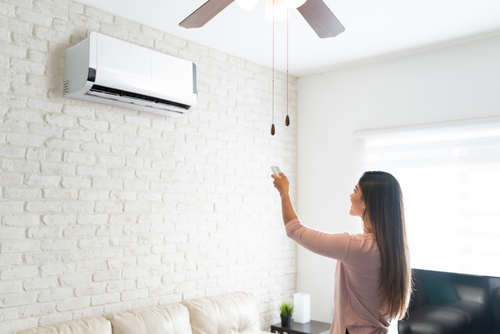 They say that the only constant in life is change, and that’s certainly true of our daily technology. Twenty years ago, people were still using flip phones, and bulky GPS systems were the next big thing for navigating in our cars. Similarly, heat pump systems were not a viable option for year-round heating and cooling in our part of the country back then. But advances in heat pump technology have made these systems more popular in the Northeast.
Main-Care Energy is the most trusted heat pump installer and service provider in Dutchess County and across the Hudson Valley, plus New York’s Capital Region and Western Vermont. In this article, we’ll discuss what these HVAC systems are and whether one is a good option for your household.
A heat pump is an all-in-one electric heating and cooling product. These products don’t require ductwork the way a furnace or central air conditioner would. A heat pump also works differently from a furnace or boiler because it doesn’t actually create heat with a burner. Instead, it moves heat around using an outdoor compressor and indoor air handlers. Even when it’s cold outside, there’s still some heat in the air. The compressor absorbs this heat with refrigerant and sends it to the air handler, which warms up your rooms.
In the summer, the heat pump reverses the process. The indoor air handler takes heat from inside your house and passes it to the compressor to expel it outside. Then, cool air flows back into your home.
There are some significant benefits of using a heat pump for your heating and cooling needs. For homes without ducts, heat pumps offer a more efficient, attractive, quiet and long-term alternative to window air conditioner units.
Heat pumps can also offer some amazing efficiencies to save you money. Ductless models eliminate duct losses, which can lead to a lot of wasted energy. Additionally, these systems offer “zoned’ climate control, where you can keep different rooms in your home at different temperatures, lower your energy usage and save money in the process.
Heat pumps have long been used in Europe and the Southern U.S., which have milder winters. However, they weren’t a good option in the Northeast because they rely on outdoor heat to warm up homes during the winter, and our winters get incredibly frigid.
Today’s heat pumps are much better at providing heat in cold conditions than earlier generations of this technology. That said, some people in our service area have found that heat pumps still struggle to provide sufficient heat in periods of sustained freezing weather.
Main-Care Energy installs and services heat pumps, furnaces, boilers and other space heating solutions. We can provide a candid assessment of what heating option would be best for your home and climate.
When you come to Main-Care Energy for your heating and cooling needs, you will receive comprehensive and attentive care geared toward ensuring your total home comfort. Our 360° of Service guarantee means that our team is here for you around the clock, every day of the year and for the full life-cycle of your equipment.
If you’re interested in exploring your heat pump options, contact Main-Care Energy today to arrange a FREE consultation.
 Remember last summer, when smoke from Canadian wildfires turned our skies orange and hazy and the air made peoples’ eyes and throats burn? It was dangerous for anyone with health issues to be outside for days at a time. For some people, it was a scary flashback to the smoggy air from the ’70s, before eliminating air pollution became a priority. For others, it was a wakeup call about what we could expect if we don’t follow through on our clean energy goals.
Fortunately, science and technology have made major advances in creating cleaner energy—including cleaner-burning heating oil. One of the biggest changes in heating oil in recent years has been the development of ultra-low sulfur heating oil and biofuel blends. For over 20 years we’ve been supplying ultra-low sulfur heating oil which has helped put an end to environment threats like acid rain. Every gallon of heating oil Main-Care delivers is Bioheat® fuel, a blend of ultra-low sulfur heating oil (ULSHO) and biofuels. Biofuels are made from renewable resources such as animal fats, recycled restaurant oils and plant oils such as soybean.
Blending ULSHO with biofuels creates a cleaner-burning heating fuel that emits up to 80% less sulfur dioxide as well as 20% less carbon dioxide than traditional heating oils. Fewer greenhouse gases mean cleaner air and a more sustainable future for everyone!
Meanwhile, methane emissions produced by natural gas are nearly 82 times more destructive to the environment over a 20-year period compared to carbon dioxide emissions.
And according to the Northeast States for Coordinated Air Use Management , Bioheat fuel also reduces sulfur oxide, particulate matter and mercury emissions. Bottom line: By choosing Bioheat heating oil to heat your home, you contribute to better air quality for all of us and help in the fight against climate change.
Reducing carbon emissions isn’t just about slowing climate change. It can have huge implications on health. The fact is, all that carbon dioxide in the atmosphere increases ozone levels and exacerbates pollution. That leads to a higher incidence of respiratory diseases including asthma and emphysema, not to mention cancer. Poor air quality also causes worsened allergies and longer allergy seasons.
A big part of the solution is cleaner air, which means clean-burning, low-emission fuels like Bioheat are essential in curbing climate change.
Another benefit to choosing Bioheat to heat your home is that you don’t need to spend a dime on new or upgraded heating equipment. The oil heating system you have now will operate the same with Bioheat fuel. Of course, if you’re ready for new equipment, an investment in a high-efficiency boiler or furnace will help you keep heating costs down.
On the other hand, changing to a different fuel or switching to electric will require all new heating equipment and possibly upgrades to your electric service. Those costs can really add up, and your electric bill could spike as well.
All heating oil in the northeast is now ultra-low sulfur. But not all fuel suppliers deliver even cleaner, more sustainable biofuel blends. Our residential customers in New York State can take advantage of a $0.10/gallon tax credit for heating their homes with our Bioheat heating fuel. If you want to learn more about Bioheat, or set up reliable deliveries of Bioheat fuel for your New York, Vermont or Massachusetts home, contact Main-Care today!

You probably haven’t thought about your heating oil storage tank in a while. As long as doesn’t need a fill-up, it probably doesn’t cross your mind. And that’s fine: Heating oil tanks are built to last a long time. But eventually, they need do to be replaced.
We’d love to give you a hard and fast number for how long to expect your heating oil tank to last. But the honest answer is “it depends.” Age, maintenance, and construction each can influence its lifespan. The good news is that modern heating oil storage tanks have come a long way, offering decades of effectively leak-proof performance compared to older types.
Wondering if it’s time to replace your heating oil tank? Here are three key factors you need to consider:
If your tank is less than 15 years old, you’re probably ok for a several years—depending on how you care for it and how it’s made. If you don’t know when it was installed, and your home was built before 2000, you should put replacing it at the top of your to-do list.
Older tanks are made of steel and can be of single- or double-walled construction. In addition, the steel can be different gauges or thicknesses. Thicker, double walls are better. Also, the location of the connector valve can make a difference. Connectors at the bottom of the tank (instead of the side) last longer. Newer tanks are made from plastic and fiberglass and are designed to last 50 years or more.
The newest tanks are built to a much higher standard than in the past. Using alternative construction materials such as fiberglass and polyethylene for the inner lining of double-walled tanks make them virtually leak-proof. We install tanks from Roth and Granby, with state-of-the-industry construction and features engineered for long life and secure performance. In addition, modern tanks are more compact, saving you space in your basement, utility room, or garage.
If you leave your heating oil tank empty or very low in the summer months, condensation can form—and that can result in all kinds of problems. For starters, when condensation forms on the interior walls of an empty tank, that water drips down and sinks to the bottom of the tank (because water is denser than heating oil). That water becomes an ideal environment for bacteria and other microorganisms. Over time, it turns into sediment or sludge that can get into your fuel lines and clog them up. This will cause your heating system to shut down, possibly in the middle of a deep freeze. Sludge can also corrode your tank from the inside out—a big problem that could be difficult to see coming and is costly to remediate.
In the winter, your tank doesn’t stay empty long, so these issues don’t come up. And, condensation is less likely to form in colder temps. All that damage happens from the inside out, so if you see rust or seepage on the outside of your tank, you need to act fast to avoid a costly leak and spill. We recommend an annual inspection by a pro.
Replacing an old oil tank is a lot less expensive than dealing with a leak or, worse yet, a spill. Ideally, you should replace your tank before it starts leaking. Here are the telltale signs that your heating oil tank is leaking—or could start soon.
If you see any of these signs, contact us about a replacement tank as soon as possible.
Main-Care Energy’s employee-owners take pride in providing comprehensive, safety-focused heating oil tank replacement services. It’s all part of our 360 degrees of Service commitment. And ask us about our TankSure tank protection plan. During a TankSure Inspection, our team will provide an ultra-sonic test to determine if your tank is at risk of leaking.
Contact us for more information today.
 Autumn can be glorious in our area: golden days and crisp, cool nights. Then, the chill sets in, and suddenly, you’re using appliances differently — simmering a pot of chili on the stove all day after months of quick summer suppers and grilling or enjoying the glow of your propane fireplace on those cooler nights instead of cranking up your boiler just yet. Those changes in usage can affect how quickly you’re using propane and how often you’ll need a delivery.
An empty propane tank is not just a hassle. It’s also expensive. Run-outs can result in pressure problems and leaks, so we are required to perform (and charge you for) pressure testing. That’s why it’s important to know how to check your propane tank level — especially if you’re a will-call customer.
The good news is that checking the gauge on your propane tank is almost as easy as reading the fuel gauge in your car. Here’s what you need to know.
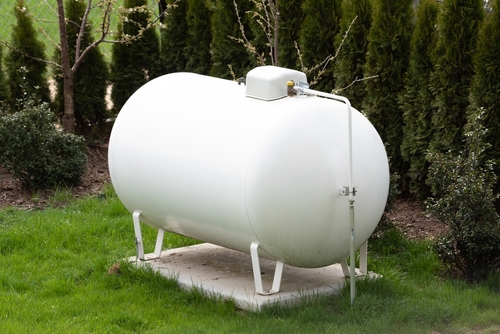
If you have an above-ground propane storage tank, the gas gauge is at the top of the tank, under a lid or dome. If you have an underground tank, the gauge will be near the fill pipe.
You’ll see a dial that looks a lot like a speedometer, with numbers going around the edge and a single pointer. The numbers indicate what percent of gas is in your tank.
Keep in mind that because propane needs room to expand, your tank will never be filled to more than 80%. Always call for a delivery before your tank falls below 20%, so we have time to schedule a delivery. If your tank falls below a certain level, you could lose pressure, which can lead to problems with equipment.
Do you use heating oil instead of propane? Your tank also has a gauge. It’s typically a clear glass or plastic vial on top of your tank with markings like a car’s gas gauge: F, ¾, ½ and ¼. A marker or float rests in the vial, showing you how much heating oil you have.
Of course, it’s good to know how to check your tank level, but it’s an easy task to forget about. That’s why we give you an easier way to make sure you get fuel deliveries when you need them — without having to remember to check your tank and call us for delivery. It’s our automatic delivery service.
Main-Care Energy offers free automatic delivery service, so you don’t need to remember to check your gauge or schedule fuel deliveries. Thanks to a proven industry algorithm based on your past usage and average daily temperatures, we can calculate your propane or heating oil use and make sure we fill your tank on time. Automatic deliveries mean you don’t have to worry about running out of heating fuel, and you can rest easy knowing we won’t let you run out.
Automatic delivery service makes things easier on our end, too. It means we’re better able to plan deliveries using the most efficient routes to get to everyone quickly. That saves time and money — savings we can pass on to you. You don’t even need to be home for the delivery.
For seasonal homeowners, people running rental properties, and anyone whose heating fuel usage fluctuates a lot, we recommend our wireless tank monitor. It tracks the level of fuel in your tank in real-time and transmits your usage via wireless and cellular technology. When the tank gauge reaches a pre-set level, the monitor alerts us (and you) directly via a wireless mobile app — and sets up a delivery.
We love the technology that makes all this possible, but of course, we still believe in old-fashioned customer service—it’s our 360* of service commitment. That’s why our friendly and knowledgeable employee-owners are always happy to take your call and answer any questions.
We’re honored to serve households throughout Rensselaer County and all across New York’s Hudson Valley and Capital Region, plus Western Vermont and Western Massachusetts. Contact us today to sign up for worry-free automatic deliveries or ask about our propane tank monitors.
 Even with some of the relatively mild weather we’ve seen in the past few years, winter in New York, Vermont and Massachusetts feels raw and damp. When it comes to keeping your home warm and cozy, heating oil is a safe and efficient option for many homes. And, what you may not know is that the development of ultra-low sulfur heating oil and Bioheat® fuel blends have turned heating oil’s bad reputation on its head.
On its own ultra-low sulfur heating oil burns more cleanly than traditional heating oil. When it’s the Bioheat® fuel that we deliver, that’s mixed with biofuels, the result is a cleaner-burning heating fuel that emits up to 80% less sulfur dioxide as well as 20% less carbon dioxide than traditional heating oils. Fewer greenhouse gases mean cleaner air and a more sustainable future for everyone!
Here’s another benefit of heating oil: It’s delivered to your home by the company you choose—not a utility. That means you have options: you can opt for an employee-owned full-service company like Main-Care. If you’re a Main-Care customer, you know you can pick up the phone any time, day or night, and we’ll have your back. It’s part of our 360° of Service commitment, a commitment to providing you service that exceeds expectations every day.
But it’s not just about breakdowns and emergencies: You can count on us for every-day needs and convenient services like automatic delivery (so you never have to think about calling for fuel), budget friendly payment options that take the sting out of winter bills, tune-ups and so much more.
Contact us for more information and to become a customer today.


