 The trucking industry is navigating a complex landscape when it comes to diesel fuel. Despite ongoing challenges for diesel producers and users, the U.S. remains the world leader in crude oil production — a title it has held for the past six years. This underscores the prominent role diesel and other crude oil products play in our country’s economic competitiveness.
At the same time, the industry is evolving with the increasing integration of lower-carbon alternatives, such as biodiesel and renewable diesel. These fuels not only significantly reduce carbon emissions but also enhance diesel performance by improving lubricity and increasing the fuel’s flashpoint. The result? Safer, longer-lasting diesel engines that align with environmental goals while continuing to meet the demands of trucking companies.
In this blog, we’ll explore the challenges facing trucking companies that rely on diesel, along with the innovations that forward-thinking companies like Main-Care Energy offer clients in the Northeast.
Fleet operators who rely on diesel in the Hudson Valley, the New York Capital Region and parts of Vermont and Massachusetts are encountering challenges that hinder both productivity and profitability. Here are some of the key issues:
We are always cognizant of the challenges our diesel customers face in Ulster County and throughout our service area. Our diesel team offers the following services to make fleet fueling a breeze:
If you need world-class diesel services, look no further than Main-Care Energy. Become a commercial fuel customer today and never worry about dependable diesel again.
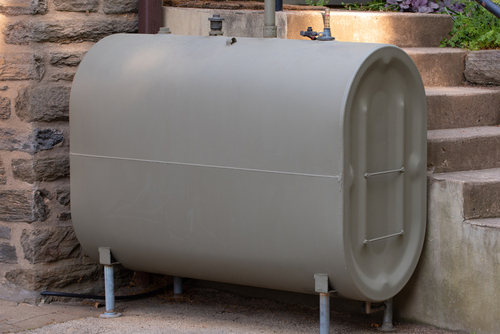 We have some excellent news for you if you heat your home with oil. Heating oil is just about the safest way to keep your home warm when outdoor temperatures are inhospitable. Heating oil won’t explode in its liquid form. That’s why your furnace or boiler’s burner needs to heat and vaporize this fuel to make it combust. If you were to drop a lit match into a bucket of liquid heating oil, it would extinguish.
Still, as with any home energy source, there are safety concerns you should keep in mind with regard to your heating oil supply, and it’s essential that you ensure your oil tank is secure. Main-Care Energy is always here to help our customers in Dutchess County and the greater Hudson Valley — plus the New York Capital Region, Western Massachusetts and Western Vermont.
Your heating oil tank is one of the most durable pieces of equipment in your home. These tanks are built to last, with above-ground models — commonly found in garages or basements — offering a lifespan of around 25 years or more. (Underground tanks typically have a shorter lifespan, averaging about 15 years.)
One of the most common causes of heating oil tank failures is internal corrosion, which isn’t always easy to see with the naked eye. But there are some tell-tale signs of corrosion:
Additionally, keep an eye out for any dents on the tank, wobbly legs, broken gauges or cracked fuel lines.
If you notice any of the warning signs listed above, you need to reach out to us to inspect your tank. An oil tank failure is more than a mere inconvenience. If your home experiences a significant fuel leak, you might be looking at a health and environmental hazard that could cost you a considerable amount of money to remedy.
By getting in touch with our team before a tank failure, you can replace your old, precarious tank with a state-of-the-art model.
You’ll be amazed by how much more advanced, aesthetically pleasing and compact today’s heating oil tanks are compared to earlier models. At Main-Care Energy, we install top-rated oil tanks from trusted manufacturers like Roth and Granby. These tanks have double-walling and leak-prevention features.
We also offer TankSure, a protection plan that provides ultrasonic tank inspections and $1,500 of coverage toward the cost of a replacement tank. This coverage offers peace of mind that your heating oil storage tank is getting the best possible care and that you’re protected when the time comes to retire it.
Reach out to the Main-Care Energy team today to discuss your heating oil tank needs. We’re standing by to answer your inquiry and deliver 360° of Service.
 After a frigid winter in the Northeast, we’re happily experiencing milder weather. In a matter of weeks, though, we could be dealing with sweltering, hot afternoons in Greene County, the New York Capital Region, the Hudson Valley and Western Vermont. It’s just as important to have a dependable air conditioning system in the summer as it is to have a reliable heating system in the winter.
Depending on your home setup and budget, you may be better positioned to install a central air conditioning system or a heat pump. The Main-Care Energy HVAC team has the training and experience to handle either type of installation. In this article, we’ll look at the differences between these two cooling products and what factors you should weigh in selecting one for your household.
Generally speaking, central A/C systems use a compressor, a condenser coil, an evaporator coil and refrigerant to cool air, which the system then circulates with a blower fan all over your home using ductwork. If your home has a furnace for heat, a central A/C can typically use the same ducts for cooling.
Homeowners control their central A/C system via a centrally-located thermostat. In most homes, one system cools the whole house to approximately the same temperature.
Pros and Cons of Central A/C. Central air conditioning systems tend to be unobtrusive and relatively affordable to install if you have ductwork already. They’re a tried and tested home cooling option that is significantly more efficient than window units. Conversely, they have limited “zoning” options, so you often end up cooling unoccupied rooms. They also don’t have a heating component.
Heat pump systems have had incredible technological advancements in recent years and are becoming more prevalent in the Northeast. A heat pump system efficiently transfers heat between the outdoors and the interior of your home, using an outdoor compressor/condenser and an indoor air handler. The system draws heat and humidity from inside your home and transfers it outside, keeping your space comfortable and cool.
You might have heard of “ductless mini-splits,” which can provide long-term home cooling without ductwork. Ductless A/C uses heat pump technology, meaning you can enjoy efficient home cooling without the need for ducts.
Pros and Cons of Heat Pumps. These systems need no ducts and are adaptable to all kinds of spaces. Their installation can take as little as one day. Heat pumps offer efficient zoned cooling so that you can maintain different temperatures in different rooms. They also provide heating functions, which lowers your reliance on a furnace or boiler.
Heat pumps tend to have slightly higher upfront costs, but they are often eligible for rebates and other financial incentives that can lower the installation expenses. Plus, Main-Care Energy offers competitive financing options with a quick approval process.
Your home’s specific layout, your home comfort priorities and your budget will help determine the best A/C option for you.
If your home has ductwork already — and you’re happy with your current forced-air heating system — then central A/C is probably the best option for you.
Households without ductwork — and those looking for a system that provides both heating and cooling — should definitely explore their heat pump options. Just bear in mind that many of our customers who install heat pumps choose to retain their oil- or gas-powered heating equipment as a backup option for the coldest days of the year.
At Main-Care Energy, we sell, install and service top-of-the-line central A/C and heat pump systems. Contact us today to discuss your options and receive a free estimate.
 If you’re running a business, fuel is likely a critical part of your operations — and keeping it flowing can take up a lot of your time. It powers machinery, heats spaces and keeps fleets moving.
At Main-Care Energy, we’ve spent decades ensuring businesses in New York’s Capital Region, the Hudson Valley, Western Vermont and Western Massachusetts have access to high-quality fuel services. Here’s a breakdown of the different types of commercial fuel we provide and how they serve various industries.
Diesel fuel remains a year-round necessity for companies in the transportation, construction and agriculture spaces. On-road diesel powers commercial fleets, shuttles and trucks. Off-road diesel is commonly used for equipment like generators, forklifts and excavation machinery, especially in farming and construction.
At Main-Care Energy, we deliver premium ultra-low-sulfur diesel to businesses large and small. Plus, our winterized off-road diesel ensures your operations stay efficient even in the coldest months.
Unleaded gasoline powers a wide range of vehicles and equipment, from commercial cars to landscaping products. We deliver top-quality gasoline directly to your business or make it available at our automated fueling stations for added convenience.
Main-Care Energy’s fleet fueling stations are located in Chatham, Glenmont, Guilderland and Roxbury. With individual fueling cards, detailed invoices and flexible payment options, you can eliminate lost receipts and unexpected expenses while keeping your diesel or gas-powered fleets running smoothly.
For businesses aiming to keep their spaces warm during colder months, heating oil is a tried-and-tested choice. From manufacturing facilities to retail establishments, heating oil offers robust heat generation. We exclusively provide Bioheat® fuel, a cleaner alternative that lowers greenhouse gas emissions while extending the life of your heating systems.
As a Main-Care heating oil customer, you can enjoy automatic delivery schedules tailored to your operations. We have over one million gallons of fuel in storage and can guarantee that your business will never face disruptions due to heating oil shortages.
Versatile, dependable and eco-friendly, propane plays a significant role in industries like hospitality, agriculture and construction. It powers everything from commercial kitchens and laundry equipment to heating systems and even forklifts. Main-Care Energy not only delivers propane directly to your establishment but can also monitor your fuel levels to ensure timely automatic deliveries.
Businesses across a range of industries trust our team for dependable propane services. We offer flexible capped-price programs and the ability to pay for your fuel in a four-installment budget plan.
Natural gas is growing in popularity thanks to its efficiency and extensive applications. From fueling commercial kitchens to powering dual-fuel heating systems and generators, natural gas is a cost-effective option for businesses across industries like retail, healthcare and manufacturing.
Main-Care Energy provides natural gas connections, installations and maintenance services to guarantee safety and compliance. Plus, our fixed-price natural gas contracts help businesses maintain predictable budgets all year long.
Want to reduce your energy-related workload, streamline your business’s fuel management and ensure your operations run like a well-oiled machine? Main-Care Energy is here to help.
Contact us today to learn more about our commercial fueling solutions or to become a valued customer.
 If there’s one thing you learn from 95 years of providing heating fuel for households, it’s that every customer is unique. The homes in Rensselaer County and elsewhere in our New York, Vermont and Massachusetts service region come in all shapes and configurations. Some were built recently, and others are older than our company. Some Main-Care Energy customers are individuals living in compact homes, while other accounts have multiple generations under one roof.
You can’t treat each household the same because they all have distinctive needs and challenges. Our team brings that mindset to every interaction. Our goal is to “right size” your home’s fuel service. For propane delivery customers, that means choosing the correct propane tank size.
In this article, we’ll take you through some common tank sizes and how households might use them.
Many new propane users immediately think of a handheld 20-pound cylinder. These small tanks are frequently used to fuel gas grills, fire pits and patio heaters. There are other common portable sizes of propane tanks, including 33-pound cylinders (frequently used for forklifts) and 100-pound cylinders (used for food trucks, RVs and sundry commercial functions).
Of course, if you have home appliances, heating systems, or a standby generator that requires propane, then you’ll need a larger tank.
When we speak to new propane customers, we discuss how much propane-powered equipment their home has to select the best tank size to keep their home adequately fueled without requiring constant propane deliveries. Here are some standard home propane tank sizes:
• 100-gallon tanks can fuel one or two propane appliances (e.g., a dryer, gas range, fireplace, water heater or space heater).
• 250-gallon tanks are good for multiple propane products (but not for whole-home heating).
• 325-gallon tanks are good for a whole-home standby generator or the whole-home heating of smaller houses.
• 500-gallon tanks are commonly used to fuel whole home heating and appliances.
• 1,000-gallon tanks are generally reserved for large homes and commercial spaces.
Purchasing a home propane tank can run you hundreds or even thousands of dollars. Plus, owning a tank means you’re responsible for the costs of installation, safety testing, upkeep and repairs.
That’s why most Main-Care Energy customers choose to lease a propane tank owned by us. Our propane technicians can identify the best tank size for you, and then we’ll supply the tank from our extensive inventory. For much of the year, we can offer a same-day tank swap in as little as one day. And as long as you remain a Main-Care Energy propane delivery customer, our expert team will handle all the maintenance and repairs for your tank.
If you add more propane equipment to your home, we’re also happy to switch you to another tank size at no additional charge. We never charge a rental fee, environmental fee or delivery fee. Everything is included in our True Price Per Gallon. That’s just one of the ways our team provides 360° of Service!
To enjoy this top-tier service and the most dependable propane delivery in the region, become a Main-Care Energy customer.
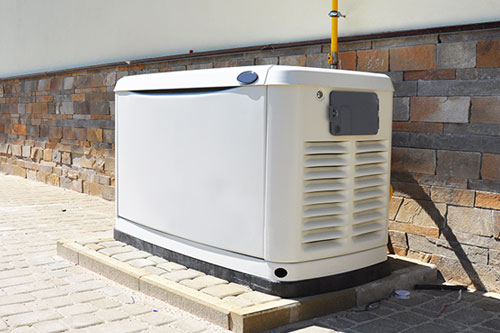 There’s never a convenient time to lose power at your home, but blackouts often occur during major weather events when you and your loved ones are the most vulnerable: blizzards, cold snaps, super storms and heat waves, to name a few.
A power outage can rob you of your access to HVAC systems, security systems, refrigeration, communications devices, electronic mobility products and medical equipment. This isn’t just inconvenient; it’s dangerous.
At Main-Care Energy, we help homeowners remain comfortable and safe during power outages in Schenectady County and across New York’s Hudson Valley and Capital Region (plus Western Vermont). We sell, install and maintain world-class standby generators powered by natural gas and propane. In this post, we’ll explain how these systems protect you from power interruptions — and what you should consider when placing one on your property.
If you’re looking for the most reliable, user-friendly backup power solution for your home, a gas-powered standby generator is the way to go. These systems are equipped with a sensor that automatically detects when your home loses grid power and seamlessly switches to generator mode. They connect directly to your home’s propane supply or a natural gas line. Consequently, they eliminate the hassle of refueling with gasoline or diesel — especially critical during prolonged blackouts when gas stations may be out of service.
Propane and natural gas are also cleaner-burning than their diesel or gasoline-powered counterparts. They produce significantly fewer emissions of carbon monoxide, nitrogen oxide and sulfur oxide. This not only reduces environmental impact but also improves air quality around your generator.
And let’s not forget its adaptability. Whether you’re looking to power your entire home or just essential appliances, there’s a generator designed to meet your specific needs.
Standby generator installation requires a highly trained and experienced team. It involves connecting gas lines, and the generator releases combustion byproducts. You need to consider local codes and regulations for the placement of this equipment. It’s also best to place the unit where it can access both its fuel supply and your home’s electrical panel with minimal piping and cables.
Additionally, the National Fire Protection Association stipulates essential safety considerations. For example, your system needs to have:
An experienced installer with proper training on your equipment will be able to account for all of these considerations when placing and installing your standby generator.
If you’re interested in installing a top-rated standby generator at your home, look no further than Main-Care Energy. We sell Generac generators, and our attentive technicians can handle every aspect of the installation. We also offer comprehensive service protection plans for your generator. Give us a call for more information!
With Main-Care Energy, you can receive total electric independence, backed by our 360° of Service promise.
Contact us today for a FREE estimate on a Generac standby generator.
 Homeowners in our part of the country are no strangers to extreme weather. From frigid winter mornings to sweltering summer afternoons, homeowners in Saratoga County and throughout the Hudson Valley, the New York Capital Region, and Western Vermont experience a climate that demands versatility in home heating and cooling. Wouldn’t it be ideal to have an HVAC system that combines the efficient adaptability of a heat pump with the reliable heating power of a traditional furnace?
Main-Care Energy has a solution for your year-round comfort: a hybrid heat system.
A hybrid heat system, also called a dual-fuel heat pump, is a great way to keep your home comfortable year-round while staying energy-efficient. In the summer, it works like a regular heat pump, cooling your home by moving heat from inside to outside. On mild fall and winter days, it pulls heat from the outdoor air to warm things up. But when it gets really cold (below 40°F) outside, the furnace kicks in to generate the robust warmth you need. It’s a smart system that adjusts based on the weather, so you get the best of both worlds all year long.
Like any HVAC system, hybrid heating has its pros and cons. Here are some of the considerable advantages:
Here are some of the potential cons of a hybrid heat product:
Hybrid heat systems are popular for their cost-saving potential. Switching between electricity for milder weather and your furnace for extreme cold reduces overall energy use and utility bills, especially in regions with more extreme winters like ours.
In fall and early winter, the heat pump function is generally more efficient than a traditional furnace. When temperatures drop, the furnace takes over, keeping your home warm without overloading the heat pump. This balance optimizes energy efficiency over time.
If you’re still unsure whether hybrid heating is right for your home, the experts at Main-Care Energy are here to help. With extensive experience in heating and cooling systems, we’ll assess your specific needs, recommend the right solution, and ensure a smooth installation process. We can even help you secure available rebates and financing options to maximize your savings.
Contact Main-Care Energy today to arrange a free consultation and estimate. Together, we’ll ensure your home stays perfectly cozy all winter long — and refreshingly cool in summer.
 If your vision of heating oil involves a lot of soot and black smoke, you’re probably thinking of the fuel your great-grandparents used. Today’s heating oil is lightyears more advanced than the heating oil of prior generations. At Main-Care Energy, we’re thrilled to be delivering some of the most refined and environmentally responsible fuel in Washington County and across the Hudson Valley and the New York Capital Region (plus Western Massachusetts and Western Vermont). This product is called Bioheat® fuel.
Bioheat fuel is a revolutionary home heating product that is slashing greenhouse gas emissions in homes across the Northeast right now.
It is a blend of ultra-low-sulfur heating oil and organic biodiesel. You can use Bioheat fuel in existing heating oil boilers, furnaces, and water heaters without modifications. Please allow us to break down the benefits of Bioheat fuel.
The heating oil you use today is ultra-low sulfur, containing just 15 parts per million (ppm) of sulfur compared to the approximately 4,000 ppm found in older fuels. This dramatic reduction plays a crucial role in enhancing air quality and improving system durability.
Biodiesel is a gallon-for-gallon replacement for petroleum, and it significantly lowers carbon dioxide (CO₂) emissions, plus other greenhouse gas emissions.
Biodiesel is made using plant oils, animal fats, used cooking oil, and other renewable feedstocks. It is classified as a biogenic fuel — produced by living organisms. Unlike fossil fuels like natural gas, which release 100% of their stored carbon into the atmosphere, biodiesel offers a more sustainable alternative. Its combustion actively recycles carbon dioxide emissions through renewable resources such as plant materials and other biomass feedstocks. This closed-loop process significantly reduces the environmental impact, making biodiesel a cleaner and more eco-friendly energy source.
In addition to CO₂, Bioheat fuel reduces emissions of sulfur oxide, particulate matter, and mercury.
Bioheat fuel is not just environmentally friendly — it’s also beneficial for your heating equipment. The carefully balanced biodiesel levels in our fuel blends are designed to enhance the longevity and performance of your boiler or furnace.
Our mission is to always be there for our customers — around the clock, all year round, and for the full life-cycle of your equipment. We call this 360° of Service, and it means we stand behind every service visit, system installation, and delivery of heating oil we provide. When you turn to Main-Care Energy for your heating oil delivery, you can be confident that you’re receiving a high-efficiency, clean-burning product that’s great for the environment, your family, and your budget.
We would love to start delivering premium Bioheat fuel to your home in New York, Vermont, or Massachusetts. Reach out to us to become a Main-Care Energy customer and get the home comfort you deserve.
 In case you needed another reminder, this winter provided a case study of how frigid conditions can get in the New York Capital Region, the Hudson Valley, Western Vermont and Western Massachusetts.
When we start experiencing whole weeks of freezing weather — not to mention icy roads and deep snow — it’s a relief to live somewhere that’s oil-heated. Heating oil has unmatched heating capacity. A single gallon of this fuel can generate the same amount of heat energy (measured in British thermal units) as 133 cubic feet of natural gas or 40 kilowatt-hours of electricity.
However, if your oil tank is located outdoors, then the icy weather can present additional problems. Luckily, there are solutions to prevent heating fuel performance issues in freezing conditions — and Main-Care Energy has a winter-resistant heating oil that can do just that!
Traditional heating oil doesn’t handle extreme cold well. In fact, it can start to freeze at 16°F, though it doesn’t turn solid like ice. Instead, it thickens into a waxy sludge in a process called gelling. Early in the gelling process, wax particles form in the oil, which can circulate in your heating system and cause problems.
Components of your oil heating system can face multiple issues:
Some additives can address gelling and stabilize fuel in cold conditions. You might also have heard of kerosene as a cold-weather fuel oil option. Like traditional heating oil, kerosene is a distillate of crude oil. Distilled at extremely high temperatures, kerosene is a clear fuel with a much lower gel point.
Blending kerosene with traditional heating oil is a winterizing solution, but using 100% kerosene in equipment designed for traditional heating oil can cause damage. (It’s also really expensive.)
Fortunately, Main-Care Energy delivers a winter-ready heating oil product that has some incredible advantages over kerosene. It’s called WinterGuard.
WinterGuard is not kerosene, but it works in oil-fired heating equipment and tanks that require special protection against sustained freezing temperatures. When you choose WinterGuard for your outdoor tank or mobile home, you enjoy some considerable advantages:
Don’t let your heating system face operating issues because of gelling fuel. Reach out to Main-Care Energy today to order premium-quality WinterGuard fuel.
 When you’ve been working with homeowners since 1930 to maintain a high level of comfort throughout the winter, you learn a thing or two about their concerns and preferences. At Main-Care Energy, we offer a wide range of home comfort services, from delivering heating oil and propane to installing and servicing heating equipment.
We appreciate that home heating equipment is one of the most consequential investments you’ll make for your home. That’s why we’ve committed to being there for you all year round and for the full lifecycle of your heating system to keep it running at peak performance. We call that 360° of Service.
That said, there comes a time in every household when it makes more sense to replace your furnace, boiler, or heat pump than pay for more repairs and service. In this article, we’ll discuss why you may want to consider a new home heating system.
Generally speaking, you should consider replacing any heating system over 15 years old if you’re experiencing service issues. What does that mean?
A heating system upgrade may be a significant upfront investment, but it pays off in many significant ways:
Are you interested in looking into a new, high-efficiency boiler, furnace, or heat pump? Main-Care Energy has you covered. We proudly serve customers in Hyde Park and throughout the NY Capital Region, Hudson Valley, and Western Vermont. Contact us for a FREE estimate.


