 When our customers talk to us about home comfort improvements, they often start with the biggest and most expensive pieces of equipment: furnaces, boilers, central air conditioners and heat pumps. While it’s true that these systems have a huge influence on your year-round quality of life and home budget, there’s a smaller and less expensive device that can be just as important: your thermostat.
At Main-Care Energy, we help homeowners in Saratoga County, the greater NY Capital District, the Hudson Valley and Western Vermont get the best performance and efficiency from their heating and cooling systems. In these sweltering summer months, upgrading to a smart thermostat can have an outsized impact.
Manual thermostats are typically knob- or box-shaped and have a single dial to set a temperature for your whole home. They also generally have a switch or toggle to shift from heating to cooling. You can often see a readout of the current temperature in the room and what the thermostat is set to.
Programmable thermostats have the same functionality but also allow you to program settings for your system, scheduling increases and reductions in your home temperature for specific times of the day.
Smart thermostats are programmable, but they have lots of other functionalities. They connect to your home’s Wi-Fi and can be controlled from your mobile devices. These models may connect to your utility company (with your permission) to moderate temperatures during periods of high demand, and they can make additional energy-saving changes automatically.
Smart home temperature adjustments can reduce your household’s energy consumption and considerably lower your annual spending without significantly impacting your comfort. Indeed, the U.S. Department of Energy has found that American families can save up to 10% on their heating and cooling costs simply by turning back their thermostats by 7°-10°F for 8 hours each day.
If you invest in a smart thermostat, you can ensure these cost savings by:
If you want to improve your home’s thermostat management and automate some other essential systems and items in your house, the Main-Care Energy team is here to help. We offer customers a slate of services called Main-Care Connect, a cutting-edge solution to protect your home from frozen pipes, water damage, and other costly issues. This innovative system links devices throughout your house directly to your smartphone or smart device, keeping you informed and in control at all times.
Our Main-Care Connect devices — which include a smart thermostat — allow you to do all these actions remotely:
Reach out to the Main-Care Energy team today to get started automating your home for energy savings and improved peace of mind!
 Natural gas has long been a favorite energy source for homeowners. With its versatility, efficiency and low carbon impact, it powers many essential home comfort systems and popular appliances. Main-Care Energy is here to help you unlock the full potential of natural gas with reliable installations to expert safety checks.
If you’re in Washington County, the greater NY Capital District or the Hudson Valley, we’re ready to connect you to the incredible benefits of natural gas appliances.
Natural gas gives homeowners the ability to power a wide range of appliances, both indoors and outdoors. Here are just a few examples of the products fueled by natural gas that can make life more comfortable and enjoyable:
Natural gas provides homeowners with considerable advantages that enhance their living experience:
Adding natural gas appliances to your home can be transformative, but their installation requires the expertise of skilled professionals to ensure safety and reliability. Main-Care Energy has decades of experience providing homeowners with safe natural gas installations and thorough system checks.
Our technicians handle every project with care and precision, including:
Your family’s safety and comfort are our top priorities. When you choose Main-Care Energy, you gain peace of mind knowing your gas connections and appliances meet the highest standards.
Looking to power your home with natural gas? Trust Main-Care Energy to install and maintain your systems with care and expertise. Contact us today to get started!
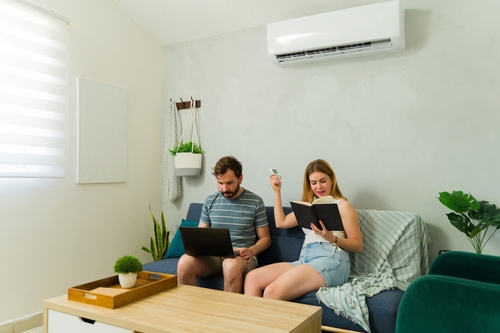 Moving into a new home is exciting, but it’s important to take stock of your house’s heating and cooling equipment and determine if it needs an upgrade. Ensuring you have the right HVAC system is key to year-round comfort. The wrong choice can leave rooms too hot in summer or freezing in winter and burden you with high energy bills.
For homeowners in Warren County and throughout New York’s Hudson Valley, the Capital Region and Western Vermont, Main-Care Energy has been a trusted partner in HVAC installations for nearly a century. With many heating and cooling options out there, understanding your choices is essential for making the best decision.
Let’s break down the three best HVAC systems for homes in our region so you can choose the one that fits your needs and budget.
Central heating and cooling is the most popular choice for homes in our region — and for good reason. These systems are reliable, providing consistent comfort throughout your home.
A central system combines a furnace for heating and central air conditioning for cooling, with conditioned air distributed through ducts. They can run on heating oil, natural gas, propane or electricity, letting you choose based on availability and costs in your area.
Central HVAC systems are dependable, delivering powerful heat during freezing winters and cool air during summer. Modern high-efficiency heating units can reach up to 98.5% efficiency, meaning nearly all the energy you pay for goes directly into heating or cooling your home.
Keep in mind, central air and furnace systems require ductwork, so it’s important that your new home has this ductwork (or the space to add it).
For those interested in innovative, all-electric technology, ductless heat pumps are an excellent option. They’re ideal for smaller homes, sunrooms, attics, guest houses or studios. You can also set up a system for a larger home.
Ductless heat pumps transfer heat instead of generating it. In winter, they pull heat from outside air into your home; in summer, they move heat out. This makes them highly energy-efficient in moderate weather.
Their major advantage is flexibility. Without the need for ducts, they can go where traditional systems can’t. They also allow zoned heating and cooling, so you only condition rooms you’re using, saving energy.
However, ductless systems can struggle in extreme Northeast cold. When temperatures drop well below freezing, these systems may not extract enough heat, leaving your home less-than-toasty during harsh winter nights.
Hybrid systems combine the efficiency of heat pumps with the reliable heating power of traditional furnaces. They automatically switch between the two based on outdoor temperatures.
In mild weather, the heat pump efficiently handles heating. When temperatures fall below freezing, the system switches to furnace heating for steady warmth. In summer, the heat pump provides efficient cooling.
This smart switching maximizes energy savings, always using the most cost-effective option. Hybrid systems often pay for themselves within three to five years through reduced energy costs. While they require a higher upfront investment, they offer excellent long-term value, frequently lasting 20+ years with proper maintenance.
Whichever HVAC system you choose, Main-Care Energy can integrate smart technology to enhance comfort and efficiency. Our Main-Care Connect service adds advanced home automation features to your HVAC system.
With Main-Care Connect, you can control your thermostat remotely, receive alerts about extreme temperatures and monitor system performance from anywhere. Smart features like programmable schedules and automated adjustments help optimize energy usage while adding convenience and peace of mind.
Proper installation is just as important as choosing the right system. Main-Care Energy’s technicians ensure your HVAC system is installed correctly for optimal performance and years of reliable service.
Contact Main-Care Energy for a free consultation and estimate for your home’s HVAC system. We’ll work with you to identify and implement the perfect solution for your comfort and budget.
 You have lots of things to worry about in the summer, from keeping your air conditioning running well to making sure your kids have what they need for camp. When it comes to your home comfort, Main-Care Energy has the resources and dedication to help you out in the summer and all year long. It’s part of our 360° of Service commitment. Our team is there for you every hour of the day and every season of the year for just about every aspect of our home comfort.
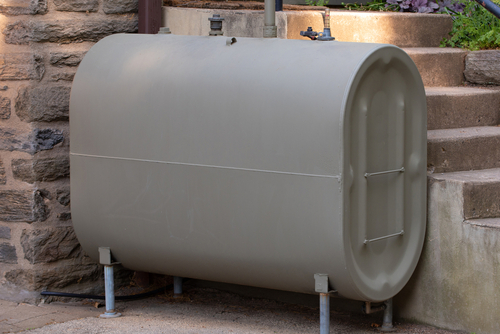
In the hotter weather, many homeowners in Glens Falls, the greater NY Capital Region and the Hudson Valley (not to mention parts of Massachusetts and Vermont) aren’t thinking about heating oil. But it’s a good idea to pay attention to how much fuel you have in your heating oil tank and make sure it’s filled well in advance of the winter. In this post, we’ll tell you why.
Keeping track of your heating oil levels is key to staying prepared during colder months, and it’s easier than you might think. Start by locating the tank gauge, usually found on top of the tank as a glass or plastic tube with markings like F (Full), ¾, ½, ¼ and E (Empty). A colored float shows the current oil level. To ensure the gauge is accurate, remove the casing and gently press on the float. If it bounces back, it’s working properly; if not, it may need service. Finally, read the gauge like a car’s fuel gauge; if it’s at ¼ or less, it’s time to schedule a heating oil delivery.
Many homeowners assume that heating oil usage drops to zero during the summer, but that’s not always the case. If your home has an oil-powered water heater, it continues to operate year-round. On average, water heating alone can consume about half a gallon to a gallon of oil per day. For larger households with greater hot water demands, this number can be even higher.
As temperatures begin to cool in the fall, your furnace or boiler will start to kick in, gradually increasing your fuel consumption. On a mild 50-degree day, your heating system might use less than a gallon of oil to keep your home comfortable. But when temperatures drop to around 30 degrees, daily usage can climb to two gallons or more. And as the mercury plunges below 10 degrees, you could see consumption rise to three or even four gallons per day.
If your heating oil tank is less than one-third full, we strongly encourage you to arrange a heating oil delivery soon. Here’s why:
Want to take a to-do off your list this summer — plus the other three seasons, too?
If you aren’t currently signed up for our automatic delivery schedule, now’s the time to do it. Main-Care Energy eliminates the risk of heating oil run-outs with this free offering. Our advanced monitors track your usage and schedule deliveries before you run low, so you never have to check your tank or call for fuel. Our customers love it!
Reach out to our heating oil delivery team today to enroll in automatic delivery and add some extra peace of mind to your life!
 In not-so-surprising news, the summer has arrived in our part of the Northeast with a vengeance. In Lake George, the Hudson Valley, the New York Capital region, plus western Vermont and beyond, temperatures have soared to sizzling levels.
At times like this, a well-operating central air conditioning system is an absolute must. It makes your home livable and safe. With that in mind, let’s discuss some of the ways you can support your home cooling equipment while it’s working overtime this summer. The Main-Care Energy team is also available to assist in maintaining your A/C system.
When your cooling equipment’s airflow is restricted, it ends up working harder to keep you comfortable. Additionally, your equipment can become dirty with dust, pollen and sundry debris, impeding its performance. Here are three ways you can ensure your equipment’s airflow is unimpeded:
Ice buildup on your evaporator coil or clogs in the condensate drain line can disrupt your air conditioner’s ability to cool your home effectively. While it’s possible to clear these blockages on your own, many homeowners choose to rely on a professional HVAC technician for a thorough and hassle-free solution.
If you find that your A/C unit is leaking refrigerant, do not attempt to fix the issue yourself. Reach out to Main-Care Energy right away. Our technicians have training, certification and experience to handle refrigerants.
There are several ways that you can lower your A/C usage without sacrificing comfort this summer. Making these simple adjustments will slow wear and tear on your equipment and reduce your monthly electric bill in the process:
The most essential way to prevent breakdowns, extend your A/C system’s lifespan and boost your home’s cooling efficiency is to arrange an annual A/C tune-up from an HVAC professional. At Main-Care Energy, we employ the most thoroughly trained and experienced HVAC team in the region. We’ll clean, inspect, test and calibrate your home cooling system to ensure it’s running at peak performance with minimal risk of malfunctions.
For total peace of mind, you can safeguard your A/C system with a Main-Care Energy Protection Plan. This coverage includes an annual tune-up, priority emergency service and reduced costs on repairs.
Get in touch with the Main-Care Energy team today to arrange maintenance service or enroll in an A/C Protection Plan.
 We get it — part of the joy of owning your home is taking care of some improvement projects yourself. It can be incredibly fulfilling to repaint a room, mount some new bookshelves, install a light fixture or switch out some old doorknobs.
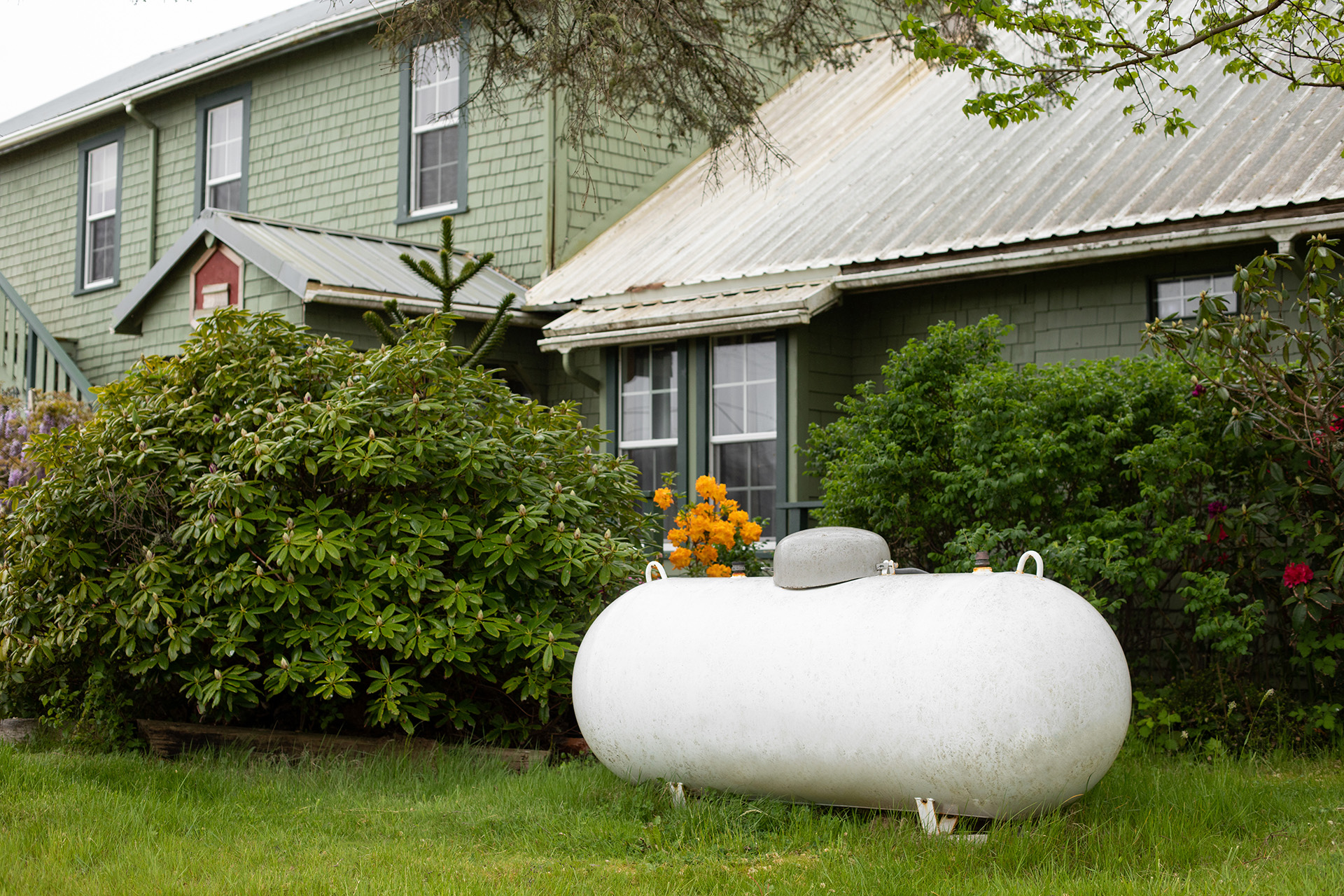
But what about propane tank installation? If you’re adding some high-efficiency gas equipment to your home — whether that be a furnace, water heater, stove, gas log or some other high-end product — you should leave the installation and connection of the propane tank to a trained professional. Here are five reasons why.
Home propane tanks are considerably larger and more complex than the cylinder you attach to your grill. They may require excavation or a concrete slab for proper placement. Without the right equipment and processes, the tank installation could become impossible and lead to an injury.
At Main-Care Energy, we have the training and experience to install and connect your propane tank in one day.*
Generally speaking, propane is an exceptionally safe home fuel — if your tank is installed and connected correctly. Connecting a propane tank to your home’s appliances requires expertise, precision and the right tools. Even the smallest error in attaching pipes, fittings or valves can lead to significant safety hazards.
The Main-Care Energy team prioritizes your safety by ensuring every connection is secure and rigorously tested. Our meticulous approach not only safeguards your home but also maximizes the efficiency of your propane system.
Home insurance companies, equipment manufacturers and state and local governments all have a vested interest in safe home propane tank installations. You need an installer with the training and experience to ensure compliance with all relevant codes and regulations. A professional installation will help you avoid fines, voided warranties and issues with your home insurance policy.
The size of your propane tank is crucial for maintaining a reliable and efficient energy supply for your home. A tank that’s too small means frequent refills, while an oversized tank takes up unnecessary space. Finding the right size depends on factors like your home’s square footage, the number of propane appliances and your daily energy use. At Main-Care Energy, we take the guesswork out of this process by assessing your energy needs and recommending the ideal tank size for your specific requirements. As your needs change, we’re here to help with seamless upgrades.
Moreover, choosing the right tank location is about more than looks. Safety codes, refueling access and distance from buildings or ignition sources must all be considered. Our team ensures precise placement, prioritizing safety, convenience, and compliance with local regulations.
Even if you manage to avoid any considerable safety hazards or regulatory issues with a DIY tank installation, there’s a strong chance that fuel will not be arriving at your propane appliances most efficiently. A relatively small issue with pipe sizing or material can result in financial losses due to wasted propane usage for years to come.
When homeowners want to add propane service in Catskill or elsewhere in the Hudson Valley, the New York Capital Region, Western Vermont and Western Massachusetts, they come to Main-Care Energy. We carry propane tanks in a wide range of sizes and offer a hassle-free same-day tank swap.* And if you are a tank lease customer, our team handles all the installation, testing and upkeep for you!
Join the family of Main-Care Energy customers today to begin receiving top-tier propane tank leasing, propane delivery and a full slate of HVAC services!
* Same-day tank swap is not available during certain times of the year. Some restrictions apply. Contact us for details.
 Have you recently installed a heat pump as your primary heating and cooling system in your home? Are you considering doing so but aren’t sure what to expect?
Heat pumps operate differently than traditional HVAC equipment like furnaces, boilers and central air conditioning. As such, homeowners can be confused about whether they are running correctly, especially when it’s swelteringly hot or freezing outside.
Allow us to take you through how these heating and cooling systems work and what their typical runtimes are.
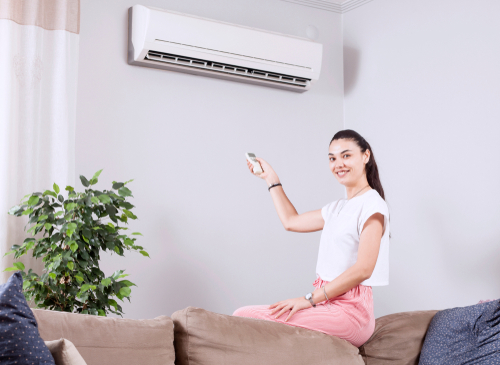
Heat pumps work by moving heat from one place to another rather than generating it. These systems are composed of two primary components: an indoor air handler unit and an outdoor unit. The two are connected by a conduit that houses power cables, tubing, communication lines and condensate drain lines. A single outdoor unit can support multiple indoor air handlers, offering versatile heating and cooling options.
In colder months, heat pumps extract heat energy from the outside air and transfer it indoors to keep your space warm. When set to cooling mode, they function like air conditioners, pulling heat from indoor air and releasing it outside through the outdoor unit. Efficient and adaptable, heat pumps provide year-round comfort with ease.
Several factors influence how long your heat pump operates, even if you and a neighbor have similar homes. Heat pump runtimes can vary due to differences in environment, insulation, and usage. Here are some key factors that impact your system’s runtime:
On average, a heat pump runs in cycles for about 2–3 hours per day. However, this can fluctuate based on the factors listed above. During extreme weather conditions, your system may run continuously to maintain a comfortable environment.
When the weather heats up, your heat pump becomes a key ally in keeping your home cool and comfortable. To maximize energy efficiency and maintain a pleasant indoor environment, set your thermostat to 78°F while you’re at home. Most heat pumps allow individual air handlers to operate independently, so consider turning off or reducing cooling in rooms you don’t use frequently.
In colder months, heat pumps perform best when set to a consistent temperature. Unlike traditional furnaces or boilers, which cycle on and off, heat pumps are designed to operate steadily rather than cycling intermittently. We recommend starting with a temperature around 68°F for optimal comfort and performance.
On particularly frigid nights, when temperatures drop below freezing, your heat pump may struggle to maintain desired comfort levels. For these extreme conditions, we suggest using your oil or gas heating system as a backup option.
To keep your heat pump operating smoothly, reduce wear and tear and lower energy costs, you need to invest in proper upkeep for your equipment. Routine maintenance keeps your heat pump running at top performance and efficiency. Annual inspections by Main-Care Energy’s HVAC technicians can catch and fix issues early.
The best way to ensure your heat pump gets the attention it needs is with a Main-Care Energy Home Protection Plan. Our plans offer annual preventative maintenance for your cooling equipment, along with priority emergency service, discounted or complimentary repairs and additional benefits. Most importantly, you’ll have total confidence that your heat pump will run dependably to keep you and your loved ones comfortable and safe.
To enroll your HVAC system in a Home Protection Plan or schedule your annual heat pump maintenance, please get in touch with us today.
 For countless homes in Rutland County and throughout our Northeast service region, propane is an absolute necessity. It provides heat in colder months and hot water all year round. It powers efficient, high-performance ranges, dryers and standby generators — plus quite a few indoor and outdoor amenities.
Propane provides this energy with a dedicated on-site tank, so you don’t need to be connected to a gas utility. And when you have a dependable propane delivery partner like Main-Care Energy, you can be confident that there’s a dedicated team ready to get to your home when you need more fuel. But how often should you plan to receive a propane delivery? In this post, we’ll break down how you can plan and budget for your propane service.
No two households use propane in the same way, and propane consumption is rarely uniform from month to month. Here are some key variables that will impact how often you need a propane delivery:
Knowing how to read your propane tank’s gauge is essential to keeping your tank from running out unexpectedly. Your propane tank is equipped with an easy-to-read gauge, typically located beneath the dome lid on top. This gauge resembles a speedometer, with numbers around the edge and a pointer indicating the percentage of propane remaining, not the number of gallons.
Running out of propane is a serious issue. Not only does it put your gas appliances and systems out of commission while we work to get an emergency propane delivery to you, but it can also lead to some additional costs and inconveniences. For example, in the event of a propane tank run-out, we’re required to perform a safety leak test before refilling your tank and relighting any pilots on your propane equipment.
We recommend that you always contact us when your tank reaches about 25% to prevent the unpleasant surprise of a propane run-out.
At Main-Care Energy, we proudly deliver 360° of Service. That means you can count on us to be there for your total home comfort every hour of the day and every season of the year. As part of this commitment, we offer ways to make tracking your propane usage and stabilizing your spending less stressful and more consistent:
Main-Care Energy proudly serves the New York Capital Region, the Hudson Valley, Western Vermont and Western Massachusetts. Become a customer today to start taking advantage of our world-class propane delivery service.
 At Main-Care Energy, we believe that you should always feel comfortable and safe in your home — every hour of the day and every season of the year.
If your home’s air conditioning equipment is over 15 years old and isn’t cooling your space like it used to, now is a good time to look into a replacement. We understand that a new A/C installation can seem like a big and disruptive process. However, it can pay off considerably in better home comfort, cleaner indoor air and lower summer energy bills.
To make your A/C replacement process go as smoothly as possible, follow these four practical tips.
Just because you’ve had one type of home cooling option in the past doesn’t mean you need to stick with it when you upgrade. For example, many homes in our service area of the Hudson Valley, the NY Capital Region and Western Vermont lack the ductwork that a central air conditioner requires. A lot of homeowners mistakenly believe that inefficient and unattractive window units are their only option.
Main-Care Energy installs high-efficiency ductless mini-split systems that can provide long-term home cooling and incredible energy savings.
With so many A/C products on the market, choosing the right one and planning for the installation can feel head-spinning. However, a professional HVAC partner will have the tools, training and experience to make your A/C installation go smoothly.
A professional can assess your current cooling system and determine if it is properly sized for your home. They can recommend a larger or smaller A/C, if necessary. Professional technicians can also take care of the additional work that can come with an A/C replacement, like additional ducts and electrical fixes.
Cooling equipment can be a sizable investment, but there are many ways to reduce the upfront costs of your A/C investment while still taking immediate advantage of the increased comfort and reduced energy spending that comes with a cooling upgrade.
At Main-Care Energy, we can assist with competitive financing for up to 10 years. The approval process is incredibly simple, taking less than five minutes!
You may also qualify for HVAC rebates and tax credits for installing high-efficiency A/C equipment.
A new air conditioning product may be a significant investment. But you can ensure that you get the longest service life, the most dependable operations and the highest possible efficiency with regular maintenance.
Main-Care Energy offers our A/C customers a way to guarantee comprehensive maintenance with our Home Protection Plans. These plans include annual preventative maintenance for your cooling equipment, plus priority emergency service, discounted or free repairs and other benefits. It’s the best way to ensure the highest return on your A/C investment!
Are you interested in exploring your home cooling upgrade options? Main-Care Energy does more A/C installations than just about any company in Bennington County, the rest of western Vermont and the Hudson Valley and New York Capital region. Get in touch with us to request a free estimate.
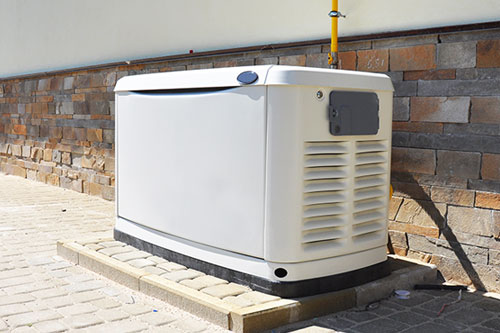 With a bit of luck and some mild weather, you won’t need to call upon your home’s standby generator too often throughout the year. But when a power line in your neighborhood goes down, or soaring summer temperatures cause a grid overload, you want to be 100% certain that your generator is ready to go. With proper maintenance, your home generator can provide reliable service for 25 to 30 years. That said, you need to take care of it.
In Orange County and throughout the Hudson Valley, New York’s Capital Region and Western Vermont, Main-Care Energy installs, maintains and repairs gas-powered standby generators. Here are four general tips for ensuring your generator is ready when the grid fails.
Just like you wouldn’t leave your car collecting dust in a garage for months on end, it’s important to give your standby generator a test run occasionally. To keep your system running smoothly, we suggest conducting a 20 to 30-minute test every few months. This helps ensure optimal performance and allows oil to circulate effectively throughout the system.
For more specific testing guidelines, consult your owner’s manual or talk to a Main-Care pro.
Your generator needs adequate space to operate safely and reliably, but Mother Nature often likes to encroach on outdoor equipment. So, take a moment at the beginning of each season to remove any debris, leaves or overgrown plants surrounding the generator. Maintain a minimum clearance of five feet from any flammable materials for safety.
You don’t need to be an electrician or HVAC professional to give your home’s standby generator a routine visual inspection. Your manual can outline specific things to look for, but here are some general upkeep tips for our eyeball inspection:
If you notice any leaks, corroded batteries or other wear or damage that could impair the reliability or safety of your generator, contact our team right away for a service visit.
While homeowners can handle a certain amount of generator upkeep themselves, these systems need professional maintenance at least once a year. Main-Care Energy offers comprehensive maintenance and repair service for generators. In particular, our customers love our Generator Protection Plan. With this service plan protection, you receive:
With a Generator Protection Plan, you can have total peace of mind that your system will run at peak performance whenever you need it.
Interested in enrolling your generator in a service plan? Need to schedule your annual generator maintenance? Contact our team today. We’re here for your home comfort needs and always deliver 360° of Service!


