Posted: April 21, 2025
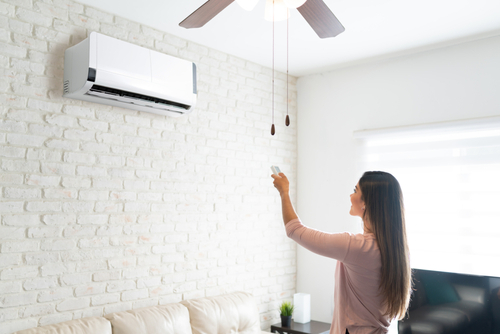 After a frigid winter in the Northeast, we’re happily experiencing milder weather. In a matter of weeks, though, we could be dealing with sweltering, hot afternoons in Greene County, the New York Capital Region, the Hudson Valley and Western Vermont. It’s just as important to have a dependable air conditioning system in the summer as it is to have a reliable heating system in the winter.
Depending on your home setup and budget, you may be better positioned to install a central air conditioning system or a heat pump. The Main-Care Energy HVAC team has the training and experience to handle either type of installation. In this article, we’ll look at the differences between these two cooling products and what factors you should weigh in selecting one for your household.
Generally speaking, central A/C systems use a compressor, a condenser coil, an evaporator coil and refrigerant to cool air, which the system then circulates with a blower fan all over your home using ductwork. If your home has a furnace for heat, a central A/C can typically use the same ducts for cooling.
Homeowners control their central A/C system via a centrally-located thermostat. In most homes, one system cools the whole house to approximately the same temperature.
Pros and Cons of Central A/C. Central air conditioning systems tend to be unobtrusive and relatively affordable to install if you have ductwork already. They’re a tried and tested home cooling option that is significantly more efficient than window units. Conversely, they have limited “zoning” options, so you often end up cooling unoccupied rooms. They also don’t have a heating component.
Heat pump systems have had incredible technological advancements in recent years and are becoming more prevalent in the Northeast. A heat pump system efficiently transfers heat between the outdoors and the interior of your home, using an outdoor compressor/condenser and an indoor air handler. The system draws heat and humidity from inside your home and transfers it outside, keeping your space comfortable and cool.
You might have heard of “ductless mini-splits,” which can provide long-term home cooling without ductwork. Ductless A/C uses heat pump technology, meaning you can enjoy efficient home cooling without the need for ducts.
Pros and Cons of Heat Pumps. These systems need no ducts and are adaptable to all kinds of spaces. Their installation can take as little as one day. Heat pumps offer efficient zoned cooling so that you can maintain different temperatures in different rooms. They also provide heating functions, which lowers your reliance on a furnace or boiler.
Heat pumps tend to have slightly higher upfront costs, but they are often eligible for rebates and other financial incentives that can lower the installation expenses. Plus, Main-Care Energy offers competitive financing options with a quick approval process.
Your home’s specific layout, your home comfort priorities and your budget will help determine the best A/C option for you.
If your home has ductwork already — and you’re happy with your current forced-air heating system — then central A/C is probably the best option for you.
Households without ductwork — and those looking for a system that provides both heating and cooling — should definitely explore their heat pump options. Just bear in mind that many of our customers who install heat pumps choose to retain their oil- or gas-powered heating equipment as a backup option for the coldest days of the year.
At Main-Care Energy, we sell, install and service top-of-the-line central A/C and heat pump systems. Contact us today to discuss your options and receive a free estimate.


